Skip to content


The physician shortage is not new. However, the concerning rise in the number of obstetricians leaving or wanting to leave healthcare is fairly recent.
[Adinserter block=“86”]
According to a national survey conducted in 2023, over 40% of obstetricians and gynaecologists stated that they felt limited in their ability to provide care after Roe v. Wade was overturned in Dobbs v. Jackson Women’s Health Organization.
Meanwhile, states like Idaho saw a quarter of its obstetrician workforce leave medical practice altogether, halting the stream of lifesaving procedures for many women in the country.
This mass exodus of obstetricians is not just a result of the burnout that plagues the physician workforce today. It’s the result of multiple medical care laws that specifically target women’s health, endangering both patients and the doctors in charge.
But could this go as far as obstetricians being completely unable and/or unwilling to provide any care altogether?
Are Obstetricians Leaving Practice?
To be fair, obstetricians aren’t the only ones who seem to be hanging up the white coat for good. Physicians from at least six specialties have stated wanting to step away from medicine in some capacity, whether it’s by lessening their work hours or leaving the field entirely via early retirement.
The primary issue gynecologists face is the key legislation that protects maternity care and its providers in multiple U.S. states, leading to healthcare deserts where access to obstetricians and their aid is restricted. Even telehealth is suffering, with only 5% providers offering online medication abortions.
[Adinserter block=“11”]
This isn’t just about overturning the historic Roe v. Wade law because areas with a total lack of obstetric clinics and providers precede it. However, it certainly exacerbates the problems obstetricians have been facing lately.
For years, obstetricians have existed in a challenging work environment, characterised by burnout, increased medical malpractice premiums, and declining Medicaid reimbursements.
Couple that with many rural communities closing down their obstetrics units due to economic pressure and restrictive laws, and it isn’t hard to see why obstetricians are having second thoughts about continuing their practice. Many have no choice but to leave, even if they don’t want to.
Specialty Vs. Intent to Leave
Dr. Gustafon, a family doctor from Idaho, reports that most maternal-fetal experts, delivery and labor doctors are relocating, and even those who wished to practice in “a small family town,” may find their hands tied, and their dreams difficult to pursue.
According to the American Medical Association, Obstetrics is the specialty with the third-highest number of doctors looking towards early retirement, with 34% intending to leave the field.
That’s one-third of a primary medical workforce exiting in one year. Some states, such as Florida, are seeing even worse statistics. Out of 1500 obstetricians, only 700 plan on continuing their practice in the field, which is only half of the total gynecologists and obstetricians in the entire state.
| Specialty | Intent to Leave |
| Internal Medicine | 39.1% |
| Family Medicine | 37.3% |
| Obstetrics and Gynecology | 34% |
| Hospitalist Medicine | 32.9% |
| Emergency Medicine | 32.3% |
| Pediatrics | 30.2% |
Physician specialties with the highest intent to leave, AMA
Obstetricians are suffering one of the worst socio-economic situations in recent times, which is hindering their ability to provide obstetric care. But if it were just regular physician burnout, we would’ve seen statistics improve like they have for the rest of the medical fraternity. So, what’s going on?
Is Obstetrics Too Risky To Practice Under the Law?
2022 was a hallmark year for those working in reproductive healthcare, the year Roe v. Wade was overturned and threw an entire branch of medicine into the dark.
Dobbs v. Jackson Women’s Health Organization ended the constitutional right to abortion for citizens all across America.
This gave individual states the power to create their own laws regarding reproductive rights, which means that each state could place its own restrictions on both access to and the extent of maternity healthcare provided to 22 million women across America.
In theory, this doesn’t sound too bad, because each state still retained the power to look out for the women and girls in their jurisdiction and help promote better reproductive healthcare laws based on the healthcare data they had. But that isn’t what happened.
Instead, Dobbs became a human rights crisis overnight, with millions protesting the Roe v. Wade overturn as it quickly devolved into making abortion care inaccessible to those who desperately needed it.
States like Florida passed laws that made abortion after six weeks a felony, punishable by five years in prison and having your medical license revoked.
Texas went a step further by banning abortion outright, except if pregnancy poses a health risk to the mother. If exercised, the abortion will be treated as a Class A felony, with the obstetrician in charge being sentenced to prison anywhere from five years to life imprisonment.
Practitioners, such as Dr. Elissa Serapio, report that they are now performing the harrowing task of watching patient health decline until abortion becomes a medical necessity.
More evidence suggests that 61% of obstetricians and gynaecologists are heavily concerned about the legal risk they take on when making decisions for their patients’ welfare regarding abortion care. They have also observed that, following Dobbs, one in four patients were unable to access the care they needed, resulting in poor patient outcomes.
This lack of physician autonomy and seeing patients suffer from laws that prevent their protection has resulted in a deteriorating standard of care, with nearly a third of obstetricians and gynecologists nationwide in agreement.
The stats get even worse in the states with a full abortion ban, with 55% of maternity care providers outcrying the crumbling healthcare system.
In Alabama, abortion care is being classified as a Class A felony, right up there with homicide and domestic violence. Which means the parties involved will be tried in the same criminal category, with the same sentences carried out as faced by murderers and aggravated assailants, according to CNN.
Will Obstetricians Stop Providing Care?
It’s not that obstetricians want to stop providing care to their patients. But rather, the circumstances are forcing them to step back.
68% of obstetricians have agreed that ever since Dobbs happened, their ability to manage pregnancy-related emergencies has devolved, which is concerning when you remember that the U.S. has the highest rates of maternal deaths of any high-income nation.
Doctors don’t want to work in a field this volatile, which is why, in addition to experienced obstetricians leaving the field, decreasing numbers of medical students are applying for residencies following Dobbs, with them hesitating to stay in gestational restriction states, as they cited access to abortion care being a priority.
This is why we’re seeing obstetricians leaving en masse.
State Laws Concerning Reproductive Healthcare
Dr. Margaret Carpenter, a healthcare practitioner from New York, was charged and fined $100,000 for providing abortion pills to a patient in Texas via telemedicine, making it one of the first criminal cases against Ob/gyns. However, it is worth noting that the New York Governor, Kathy Hochul, refused the Texas judge’s order to extradite Dr. Margaret.
New York offers “shield laws” that protect in-state practitioners from being charged in another state. “Interstate shield laws protect abortion providers and helpers in states where abortion is protected and accessible from civil and criminal consequences stemming from abortion care provided to an out-of-state resident who travels for care,” – Center for Reproductive Rights.
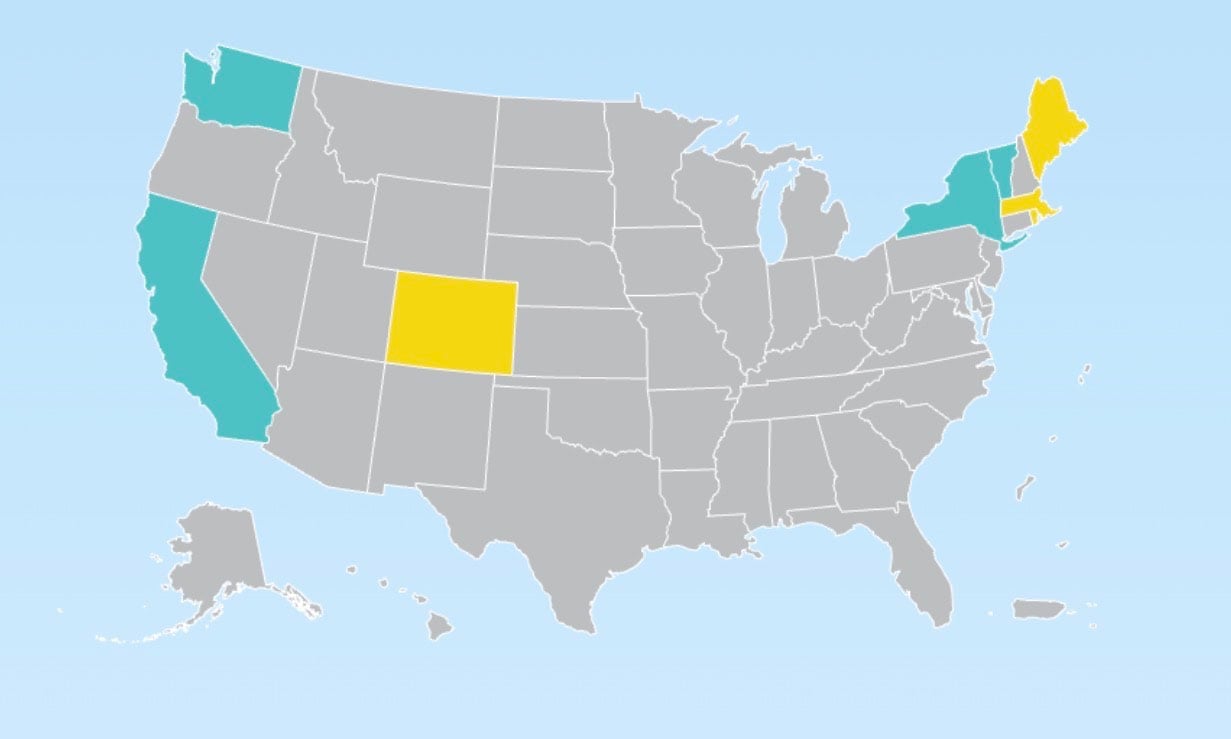
States offering Telehealth Shield Laws, Center for Reproductive Rights
Here’s a table to help you visualize state laws:
| State Category | States | Key Notes for OB/GYN Practices |
| Expanded Access (broad protections, often shield laws & funding) | California, Oregon, Washington, New York, New Jersey, Vermont, Massachusetts, Connecticut, Illinois, Colorado, New Mexico | Strongest protections. Many states have shield laws for providers and patients, telehealth protections, and public funding. Out-of-state patients often travel here. |
| Protected (legal protections, but not fully expanded) | Alaska, Hawaii, Minnesota, Colorado, New Mexico, Montana, Maryland, Delaware, Rhode Island | Abortion is legal and protected under state law/constitution. May lack shield or funding, but providers can practice with fewer legal risks. |
| Not Protected (no explicit protections, abortion still legal but vulnerable) | Pennsylvania, Virginia, New Hampshire, Kansas, Nebraska, Nevada, Maine | Abortion is legal, but without explicit statutory or constitutional protections. Access depends on political shifts. Practices should monitor legal changes closely. |
| Hostile (severe restrictions, waiting periods, mandatory ultrasounds, etc.) | North Dakota, South Dakota, Missouri, Indiana, Ohio, Wisconsin, Michigan, Iowa, Kentucky, West Virginia, South Carolina, Georgia | Abortion legal but heavily restricted. Requirements like mandatory ultrasounds, biased counseling, waiting periods. Providers must comply with strict reporting and facility laws. |
| Illegal (total or near-total bans in effect) | Texas, Oklahoma, Louisiana, Arkansas, Mississippi, Alabama, Tennessee, Idaho | Abortion mostly illegal with narrow exceptions. OB/GYN practices cannot provide abortion services; focus shifts to maternal-fetal care, high-risk pregnancy management, and referrals out of state. |
State Bans, Protections, and Restrictions, Center for Reproductive Rights
Post Autopsy: The One Big Beautiful Bill Act On Reproductive Healthcare
On July 4, 2025, the One Big Beautiful was officially passed into public law. And the ramifications of this bill on healthcare are concerning, specifically when it comes to reproductive health and the direction gynaecologists are headed in under the current government.
This legislation definitely prohibits providers such as Planned Parenthood from offering care, as they would not receive any Medicaid reimbursements.
But it isn’t just abortion care that comes under fire here; any reproductive healthcare service is currently restricted from gaining federal support or funding.
According to the National Women’s Law Centre, the OBBBA penalizes insurance companies that offer abortion care as part of their healthcare plans by taking away funding they would otherwise secure under the Affordable Care Act.
This is egregious when you consider how two-thirds of Medicaid beneficiaries are women aged between 19 and 44 years of age, who depend upon accessible reproductive healthcare as part of their routine checkups.
States such as Maine, where the majority of public sexual and reproductive health initiatives were managed by two initiatives alone—Planned Parenthood and Maine Family Planning—will now be facing immense budget cuts if they choose to keep abortion care accessible.
Abortion care is just one part of reproductive healthcare services provided by various clinics and non-profit initiatives that specialize in family and community medicine. These entities also provide other essential health care services, including access to contraceptives, STI testing, and cervical cancer screening.
However, with this bill, those entities can no longer provide those services without complying and getting rid of abortion care to millions of Americans across the country. Or making it extremely expensive, where it’s completely inaccessible to those who need it most.
What does this mean for gynaecologists and obstetricians?
The bill restricts the amount of funding they’ll receive from now on because certain procedures can’t be performed as regularly as before.
Medical students will be more apprehensive about seeking training in reproductive medical fields, such as gynaecology and obstetrics. Residents will now face greater challenges in attempting their graduate medical education, which could potentially worsen the existing shortage.
Final Thoughts
Doctors feel like their hands are tied when it comes to abortion care, leaving them with the only option of restricted medical advice. The American College of Obstetrics and Gynecologists released a statement where they confirmed that doctors don’t want to limit care, but laws out of their hands are forcing them:
“Clinicians practicing in restricted states who have trained for years and built careers on providing dedicated, compassionate care for others desperately want to help their patients and provide the care they need. Doctors are being forced to practice under draconian laws designed to prevent care in the nuanced and complex situations that occur in real life. These doctors are struggling, too, facing the despair of being prevented from providing lifesaving care. They are suffering grave moral injury, serious risk to their livelihoods, and potential loss of their personal freedom alongside their patients’ lives.”
[Adinserter block=“3”]
Sources:
- A National Survey of OBGYNs’ Experiences After Dobbs
- Idaho Sees Exodus of Obstetricians After Abortion Ban
- In 6 specialties, desire to step away or scale back is common
- As Abortion Laws Drive Obstetricians From Red States, Maternity Care Suffers
- Physician burnout rate drops below 50% for first time in 4 years
- Dobbs v. Jackson Women’s Health Organization
- Human Rights Crisis: Abortion in the United States After Dobbs
- Insights into the U.S. Maternal Mortality Crisis: An International Comparison
- The doctors leaving anti-abortion states: ‘I couldn’t do my job at all’
- New York doctor indicted in Louisiana abortion case recognized as a leader in women’s reproductive health
- After Roe Fell: Abortion Laws by State
- H.R.1 – One Big Beautiful Bill Act
- The “Big Beautiful Bill Act” Is Coming for Your Abortion Coverage
- Trump’s bill further erodes access to reproductive health care
- Comparing the Medicaid cuts in House and Senate “big, beautiful bill”
- ACOG: “Abortion Bans Are to Blame, Not Doctors”
- Abortion Is Legal in Maine, but Trump’s ‘Big Beautiful Bill’ Could Gut Much of the State’s Reproductive Health Care Access