 Skip to content

Standing desks exploded in popularity a few years ago, appearing in offices and home workspaces everywhere.

While some workplace fads fade quickly, the sustained popularity of standing desks speaks to their genuine benefits and the tangible improvements they bring to work experience.
For physicians working from home, whether that means managing telehealth appointments and reviewing charts (or writing for + managing a website about physician finances), spending 6–8 hours at a desk is common.
If you’re logging that much time in your home office, do your back (and butt) a favor by investing in a standing desk that gives you bang for your buck.
We all know that prolonged sitting is linked to increased risks of heart disease, diabetes, and other health concerns.
However, standing all day isn’t the solution either, as it can lead to joint damage and circulatory issues. The ideal approach is alternating between sitting and standing throughout the day, and that’s exactly what a quality standing desk enables.
Disclaimer: Products referenced in this article were vetted using evaluations and reviews from reputable third-party sources, including PCMag, Wirecutter (The New York Times), and Forbes Vetted. Prices, promotions, and product availability are subject to change, and the availability of the specific models mentioned cannot be guaranteed. All information was current as of the publication date.
Nothing in this article should be interpreted as encouragement to overspend or stray from a Financial Independence, Retire Early (FIRE) plan. We at PhysicianonFIRE trust that our readers are cognizant and discerning and can make the best choice for themselves — whether that means purchasing something listed here or not.
In case you missed it: A Post-Holiday Financial Wake-Up Call from Mount Crumpit
What to Look for in a Standing Desk
Before diving into our recommendations, let’s go over some key considerations:
- Height Range: Ensure the desk accommodates your height both sitting and standing. Most people need a standing height that’s approximately 0.6 times their height in inches.
- Stability: A wobbly desk disrupts focus and can damage equipment. Look for dual-motor systems and sturdy construction.
- Weight Capacity: Consider all your equipment since multiple monitors, keyboard, mouse, documents, and accessories can add up quickly.
- Ease of Adjustment: The easier it is to switch positions, the more likely you’ll actually use the standing feature.
- Warranty: Quality desks should last a decade or more. Look for warranties of 5+ years.
Also read: Work from Home Doctor Jobs: Opportunities and Requirements
Why Electric?
Electric standing desks are where physicians get the most value and usability. Users on Reddit vouch for this, across the board. Electric desks provide seamless shifts from sitting to standing, and they actually get used.
Manual desks might save money upfront, but as one remote worker noted, “You’ll crank it maybe three times total before leaving it at one height permanently.”

The ease of pressing a button rather than manually adjusting means you’ll switch positions throughout the day, which is the whole point of investing in a standing desk.
Here are our top picks:
Uplift V3 Standing Desk (Starting at $718)Vetted by: Wirecutter (NYT), Forbes Vetted The Uplift V3 is consistently praised across professional reviews and has been Wirecutter’s top pick since 2018. The V3 adjusts smoothly and quietly, responding to control inputs faster than competing models. The four memory presets are especially useful for physicians who share a home office or want different heights for different tasks (standing rounds review vs. seated charting). Customization options are unmatched. Multiple frame colors, grommet colors, keypad colors, and even a hammock if you order a 72-inch or wider desk. The bamboo desktop with a curved front edge is particularly popular among users. What physicians will appreciate: The stability, even with multiple monitors, the smooth height transitions that won’t disrupt video calls, and the long warranty that protects a significant investment. |
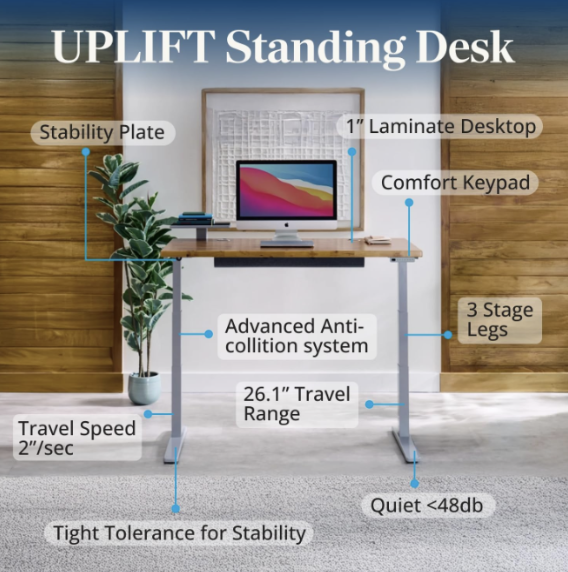
Key Features:
|
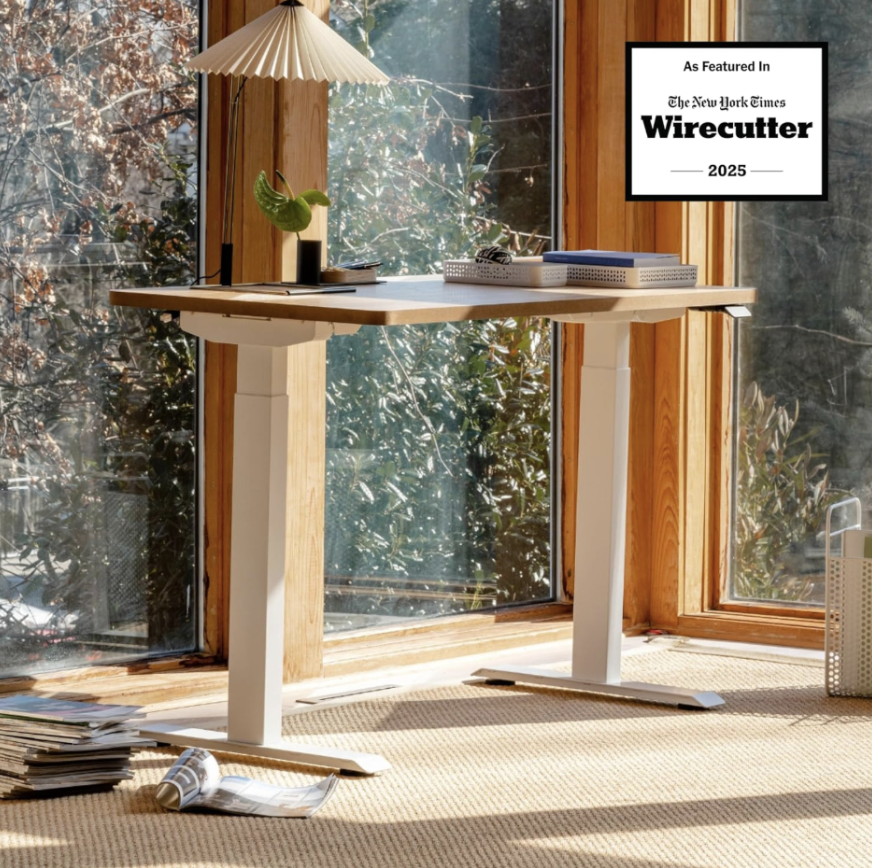
Branch Duo Standing Desk (Starting at $550)Vetted by: Wirecutter (NYT), Forbes Vetted The Branch Duo works particularly well for physicians with limited home office space. The smallest model takes up minimal square footage while still providing full sit-stand functionality. The OLED display screen offers an innovative control method, though it has a slight learning curve compared to traditional arrow buttons. Forbes Vetted praised its sturdy design and customization options, including five desktop finishes and three leg colors. The desk even reminds you when to change positions after a certain duration, which is helpful for physicians who get absorbed in patient charts or research. What physicians will appreciate: Perfect for small home offices, the reminder system promotes healthier habits, and the 10-year warranty ensures long-term reliability. |
Key Features:
|
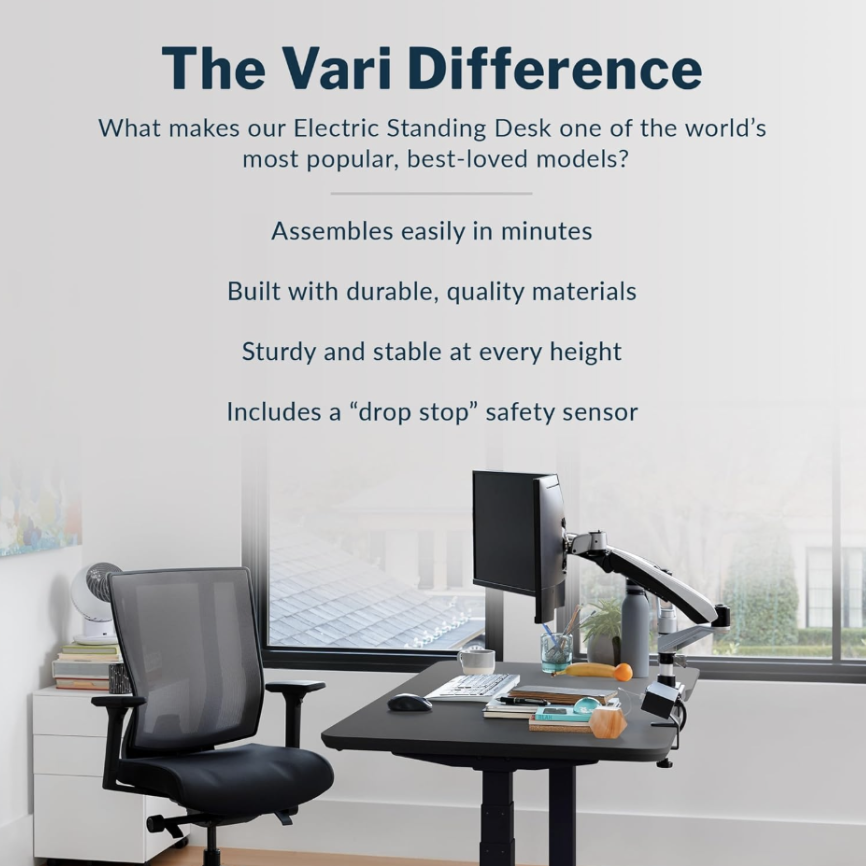
Vari Electric Standing Desk ($800)If stability is your top priority, the Vari Electric Standing Desk is unmatched. Wirecutter found it to be the most stable standing desk they’ve tested. Even at its maximum 50.5-inch height, it barely budged when forcefully shoved from all directions. The Vari ComfortEdge variant ($870) features a curved waterfall front edge that reviewers love. It eliminates the discomfort of a hard desk edge digging into forearms during long work sessions. You’ll no longer get the edge digging into your forearms. It’s something you don’t know you need until you’ve got it. What physicians will appreciate: Unparalleled stability means your monitors won’t shake during video consultations, the 10-minute assembly is perfect for busy schedules, and the lifetime warranty on most models provides ultimate peace of mind. The higher maximum height (50.5″) works exceptionally well for taller physicians. |
|
Best Standing Desk Converters
Not ready to replace your entire desk? Converters offer an affordable entry point.
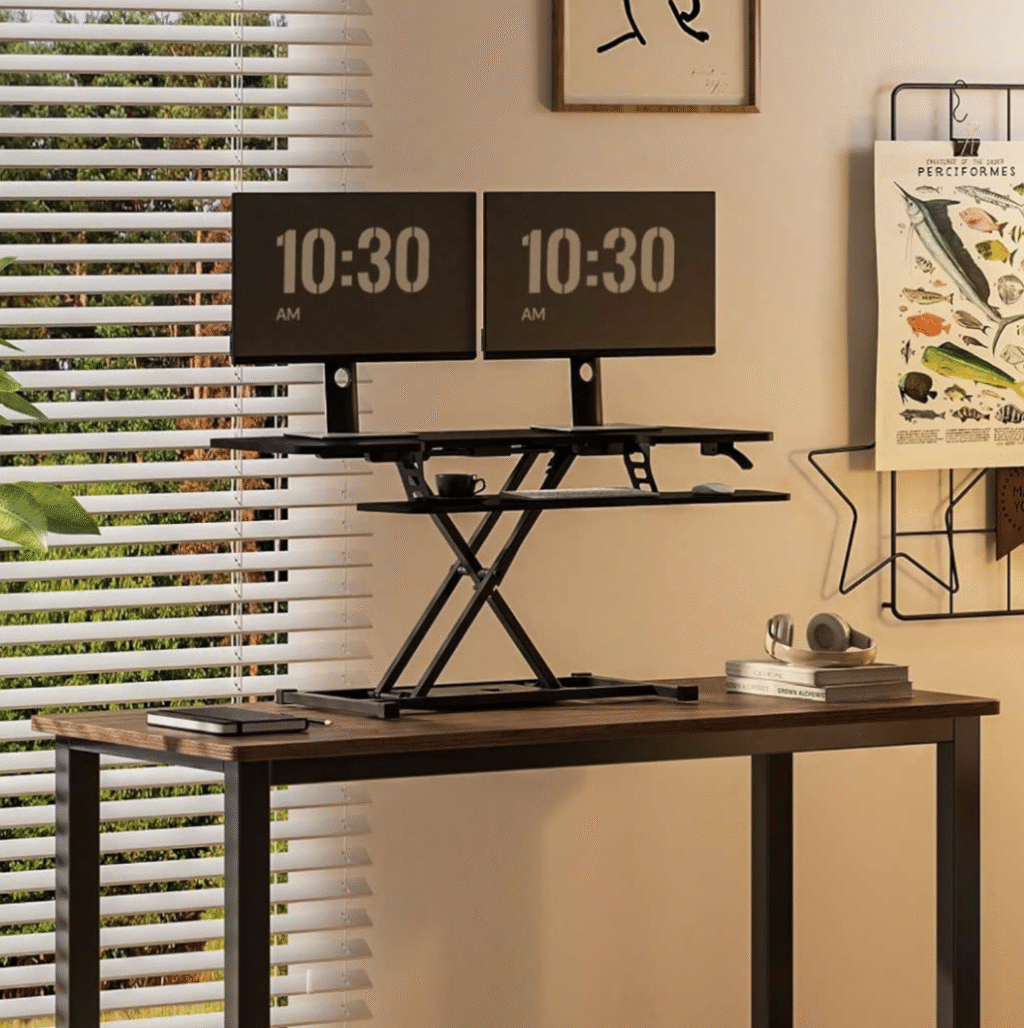
Flexispot AlcoveRiser Standing Desk Converter M7 ($180 for 40”)Vetted by: Forbes Vetted For physicians who work from various locations in their home or love their existing desk, the Flexispot AlcoveRiser is the ideal solution. Forbes Vetted updates writer Fran Sales uses this in a small apartment corner and finds it perfect for managing chronic lower back pain and tight hips. The two-tiered design allows you to position monitors at eye level on the top tier while keeping your keyboard and mouse on the lower tier. The bottom tier can be removed when not needed. Sales notes it’s “sturdy enough to hold a massive Dell monitor and my laptop stand” with “smooth one-handed operation.” What physicians will appreciate: No need to replace your existing desk, completely portable between rooms, and the detachable keyboard tray provides excellent ergonomics. |
Key Features:
|
Stand Steady X-Elite Pro Standing Desk Converter ($220)Vetted by: PCMag PCMag recommends the Stand Steady for those new to standing desks. It doesn’t take up much room, stores easily, and requires no assembly. The height adjusts from 2.25 to 16.75 inches, and it comes in four colors to fit various office aesthetics. What physicians will appreciate: Zero assembly required, fits into small spaces, and offers an easy introduction to standing while working. |
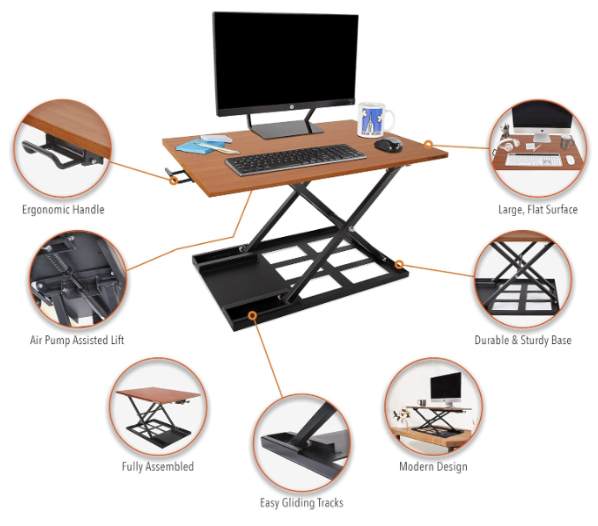
Key Features:
|
Best for First-Time Users
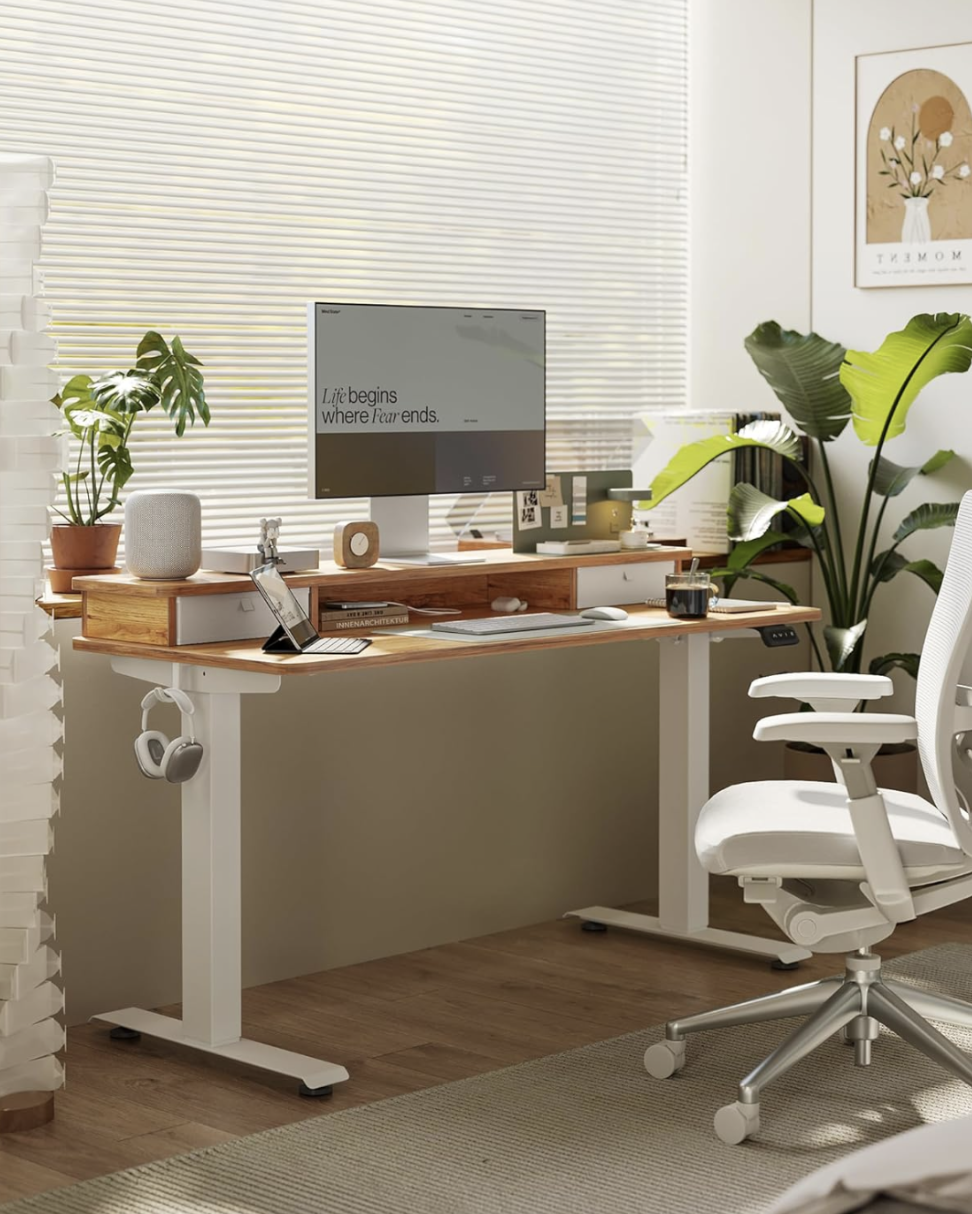
Fezibo Adjustable Electric Standing Desk With Double Drawer ($150)Vetted by: Forbes Vetted Forbes Vetted selected this as the best value standing desk as it’s feature-rich at an affordable price point. For physicians trying a standing desk for the first time, this offers an excellent risk-to-reward ratio. The two-tier design is particularly useful for medical professionals who need visual separation between multiple screens. The built-in storage drawers keep medical references, notebooks, or personal items organized and out of sight during telehealth appointments. Note that the motor moves slower than premium options, and the two-tiered design means each individual workspace is somewhat limited. Consider sizing up if you think you need to. What physicians will appreciate: Exceptional value, built-in storage for a cleaner workspace, and multiple size/color options to match your home office. |
Key Features:
|
Best Budget Option
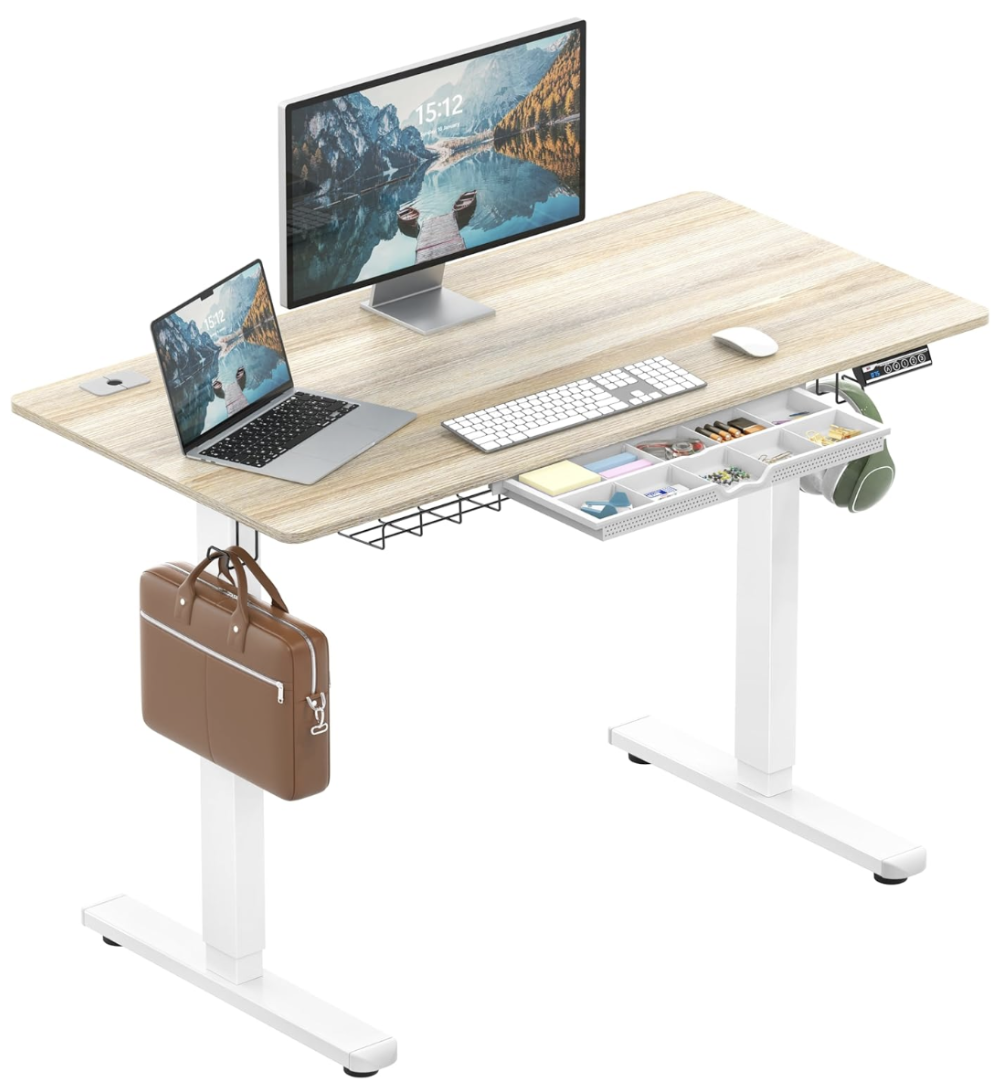
SHW Electric Height Adjustable Computer Desk ($155)Vetted by: PCMag PCMag highlights this desk for offering color options and desktop sizes at a genuinely good price. It transitions from 28 inches to 46 inches in height with a single button press, making the shift from sitting to standing effortless during your workday. While this doesn’t offer the stability or features of premium models, it provides core standing desk functionality at a price point accessible to physicians just starting their practice or setting up a temporary home office. What physicians will appreciate: The cable-management basket (essential with multiple devices), the variety of sizes to fit different spaces, and a price that won’t break the bank. |
Key Features:
|
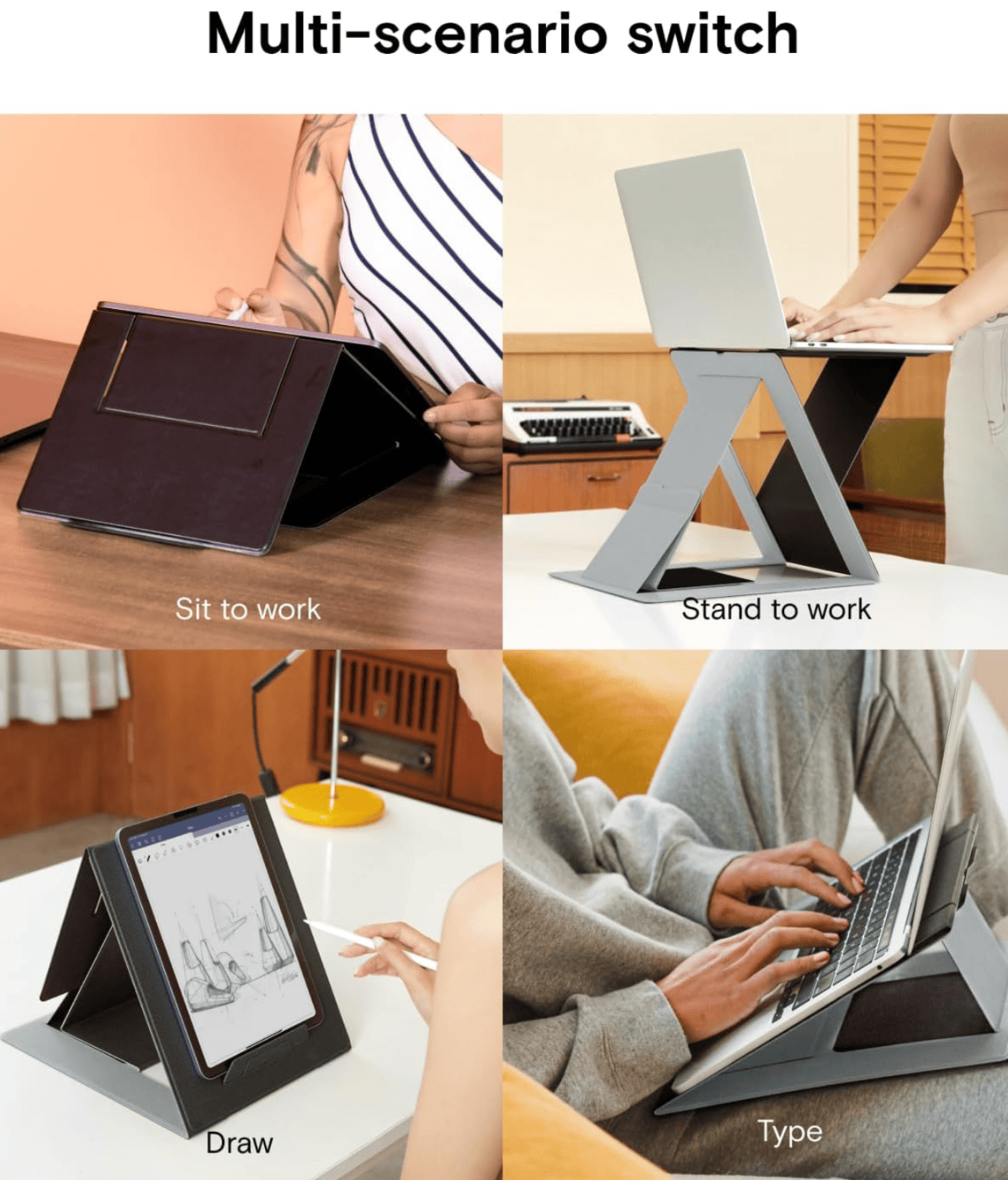
Moft Folding Laptop Stand Lap Desk ($60)Vetted by: PCMag For physicianswho need maximum portability — perhaps working between a home office, hospital office, and on-call room — the Moft is the answer. PCMag notes it adjusts to four sitting modes and one standing mode, then folds completely flat when not in use. At just 60 dollars and extremely lightweight, you can throw it in your bag and create a standing workspace wherever you go. While it won’t replace a full desk, it’s perfect for physicians who prioritize flexibility and portability. What physicians will appreciate: Ultimate portability, inexpensive entry point to standing desks, and versatility across multiple work locations.
|
Final Recommendations from Real Users
Based on Reddit discussions among remote workers, here’s what physicians should prioritize:
- Go Electric: Manual desks seem like a budget-friendly option, but users report they simply don’t get used to them.
- Get Dual Motors: Single motor setups struggle with weight and create noticeable wobble when typing. Spend the extra money for dual motors — your equipment and your focus will thank you.
- Don’t Forget Your Chair: Multiple Reddit users note that upgrading to a quality chair with lumbar and neck support made as much difference as the standing desk itself. Budget for both.
- Consider a Balance Board: If you’re standing for extended periods, a balance board at your standing desk takes pressure off your knees and lower back while engaging your core. The Fluidstance ($152 at 15% off) is frequently recommended, though cheaper alternatives exist on Amazon.
- Set Timers at First: Alternate sitting and standing every 45–60 minutes. Users recommend starting with a timer (phone or watch) until the habit becomes automatic. One user notes: “I used a timer at first (phone/watch 50/10 or 45/15). After a week or two it became muscle memory and I mostly go by feel.”
- Built-in Features Matter: USB ports, cable management, and storage drawers seem like nice-to-haves but become essential features you’ll use daily.
Long hours at a home desk are the new normal for many physicians, but everyone adapts differently. How do you cope with marathon days in the home office? Do you alternate aggressively between sitting and standing or rely on a desk setup you’d never give up?

If you use a standing desk, which model has actually held up under real-world physician use? Share what’s worked, what hasn’t, and what you’d buy again without hesitation.
In case you missed it: Best Noise-Canceling Headphones for Physicians
Frequently Asked Questions
Are standing desks actually better for physicians who work from home?
Standing desks help physicians reduce prolonged sitting, which is associated with cardiometabolic risk and musculoskeletal strain. The benefit comes from movement, not standing all day. Alternating positions throughout long charting or telehealth sessions delivers the most value.
How often should physicians switch between sitting and standing?
Most ergonomics research and real-world users suggest switching every 45 to 60 minutes. Short, frequent transitions matter more than total standing time.
What height range should a standing desk have for doctors?
A good standing desk should accommodate both seated and standing elbow height. For most adults, that means a minimum height in the low 20-inch range and a maximum height near 48 to 50 inches, especially for taller physicians.
Are electric standing desks worth the higher price?
Yes, especially for physicians. Electric desks are used more consistently because transitions require no effort. Manual desks often end up locked at one height after the novelty wears off.
Do standing desks help with back pain from long charting hours?
They can, particularly when combined with proper monitor height, a supportive chair, and regular position changes. A standing desk alone won’t fix poor ergonomics, but it can reduce sustained spinal loading.
What features matter most in a standing desk for telehealth and charting?
Stability, quiet motors, memory presets, and cable management matter more than aesthetics. Wobble and noisy motors quickly become distractions during video visits.
Are standing desk converters a good alternative?
Converters work well for physicians who cannot replace an existing desk or need portability. They are less stable at full height and limit workspace, but they lower the barrier to standing.
Is standing all day bad for you?
Yes. Prolonged standing can strain joints and impair circulation. The goal is movement variability, not replacing sitting with standing.
Do physicians need a balance board or standing mat?
Many find that a balance board or anti-fatigue mat reduces knee and lower-back discomfort during longer standing sessions. It’s optional but often helpful.
What’s the biggest mistake first-time standing desk buyers make?
Underestimating stability and weight capacity. Multiple monitors, arms, and accessories add up quickly, especially in physician workspaces.






1 thought on “Best Standing Desks for Physicians Working From Home”
In fact, having an organized and ergonomic workspace is crucial for focus and well-being. Interestingly, the same principle of optimizing one’s environment for better performance applies to creative hobbies like 3D printing, where having a dedicated, clutter-free space can enhance the enjoyment of bringing intricate models to life. If you’re looking to add a unique, conversation-starting piece to that well-organized desk, you might want to explore 3d print for premium files from video games and comics. Imagine printing a detailed Argonath statue from Lord of the Rings or a sleek starship to sit beside your monitor, a tangible reward for your discipline that blends your interest in detailed craftsmanship with a love for iconic designs.