 Skip to content

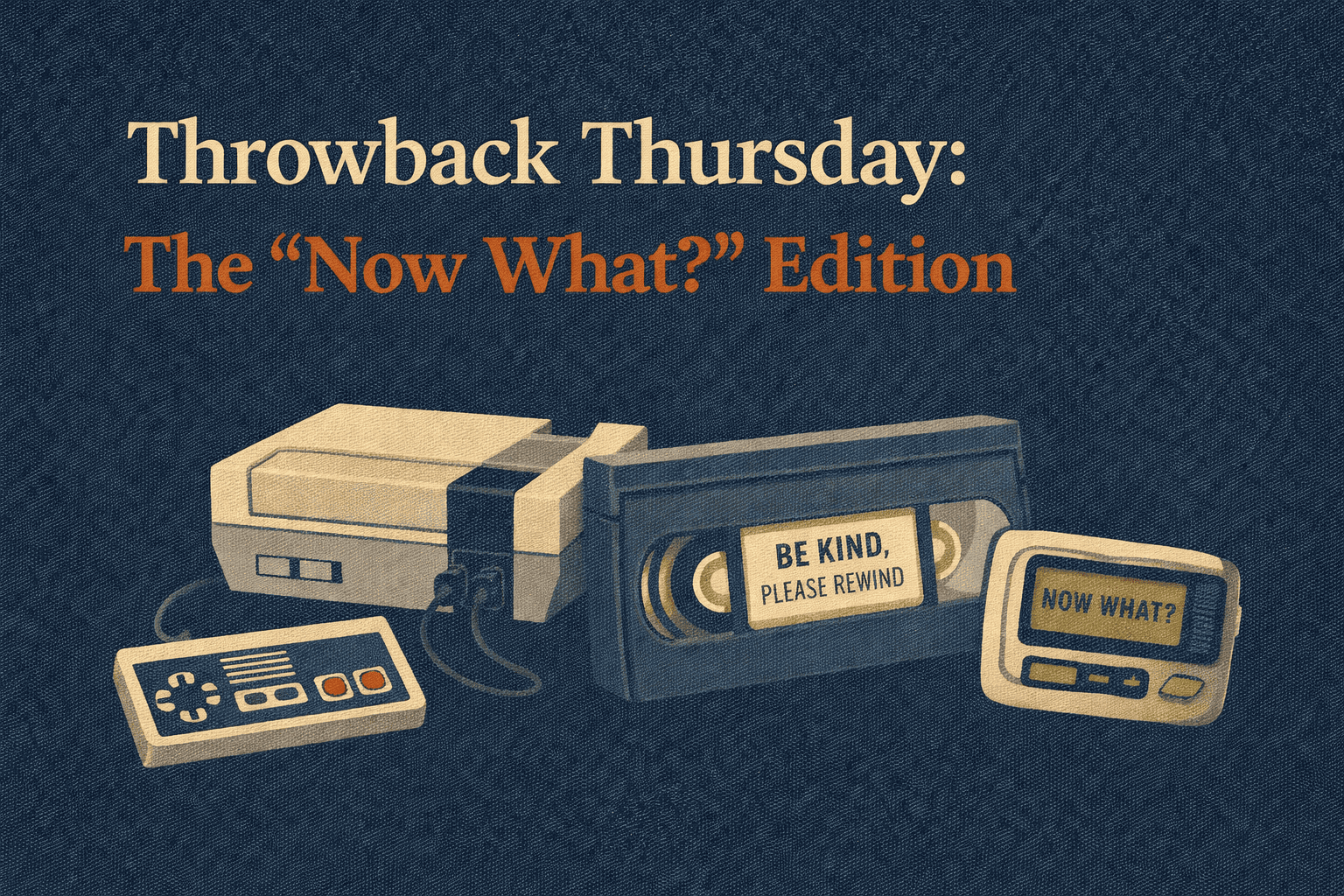
You know what nobody warned me about? The fact that retiring from medicine wouldn’t feel like crossing a finish line (as I had so naively imagined).

It would feel more like watching your reflection dissolve in a mirror.
One day you’re Dr. So-and-So. The person who knows things, fixes them, matters in rooms full of strangers. The next day you’re…well, that’s the problem. You’re just a person who used to be someone important.
We spend years becoming doctors. Decades, really, if you count the sleep deprivation olympics that is medical training. We memorize and sacrifice. We miss weddings and birthdays and entire seasons of our kids’ childhoods. All for the privilege of being needed. Of being Doctor.
Then retirement comes along and says, “Cool story, bro.”
The comments sections of our retirement articles this past year have been nothing short of collective therapy sessions. Interestingly, the most common fears don’t revolve around running out of money.
They center on running out of you.
Over the past year, our readers have been vocally engaged with articles exploring the emotional rollercoaster that is retirement.
This week’s Throwback Thursday digs into the vault to confront the messy, complicated, and deeply human side of physician retirement. I’m talking about the brutal loss of identity that catches even the most prepared docs off guard, the wisdom from those who’ve already made the leap, and that eternal question of “when should I actually call it quits?”
Who Am I Now That I’m Not “Doctor?”
It’s been said before, but I’ll say it again: retirement isn’t an ending, it’s a private metamorphosis.
Our article 11 Valuable Retirement Lessons We Learned From Physician on FIRE Readers opened with a metaphor that resonated deeply with readers. It likened retirement to the butterfly’s transformation.
Notably, this is a transformation in which the caterpillar doesn’t sleep through the change. It dissolves itself, cell by cell, into literal goo before becoming something new.

Sound familiar?
For many physicians, retirement doesn’t arrive with fanfare. It arrives with a health scare, a severance package, or simply the crushing realization that you just…can’t…anymore.
Your body will quit long before your mind does.
Dr. Kirk Crews nailed it in his comment under a piece called What Really Happens When Doctors Walk Away. “You are who you are. Only a part of that is what you do.”
That may sound simple. It’s not.
Medicine asks you to give everything, and most of us get “brainwashed” (Dr. Crews’ word, not mine) into accepting a “normal” that has no business being normal. 80-hour weeks, missed birthdays and eating lunch standing up while charting.
We become so fused with our role as “doctor” that when it ends, we’re left asking, “who am I now?”
One reader quoted Top Gun: Maverick to describe how a long career in medicine usually means doctors are unable to define themselves as anything but doctors. Isn’t that the truth for so many of us?
The lesson here is to start building an identity outside of medicine now. Don’t wait until retirement to discover your hobbies, passions, and the parts of yourself that exist beyond the white coat.
Dr. Steven Smith wrote, “Do it now in your 20s and 30s. Advance all skillsets. At 60, you will be glad you took the time for you.”
The Boogeyman At The End of The Tunnel
Let’s talk about what’s actually keeping physicians from retiring, because let’s be real, we all know, it’s rarely just about the money.
Our piece Most Common Retiree Fears broke down the big three anxieties that haunt physicians contemplating retirement:
The Great Void
When you’ve been in a routine for decades, it’s terrifying to imagine waking up with…nothing to do. No shifts. No patients. No purpose.
The boredom looms like a specter. One minute you’re managing complex cases and making life-or-death decisions, the next you’re staring at the ceiling wondering what on earth you’re supposed to do with yourself.
However, the realization that you’re not alone changes everything. That sense of shared experience — that the unease, ambivalence, and quiet grief of leaving medicine are features, not flaws — is when reconciliation begins.
Without This Badge, I’m Just…Me?
There’s something to be said about the sense of purpose that comes with being a healer. Losing it can feel like being lost in all parts of your life.
The idea of leaving such an impactful profession is jarring. There’s always one more case to diagnose, one more patient to heal. That cycle can feel never-ending, leading to a profound loss of identity when you can’t do it anymore.
With a projected shortage of up to 86,000 physicians by 2036 and about 30% of U.S. physicians over age 65, the scaffolding of care is crumbling. Many of us on the cusp of leaving fear what the future holds for us when it’s our time to be at the receiving end of care.
The Money
All personal expectations aside, financial security is a major hurdle for potential retirees.
That steady stream of income affords a comfortable lifestyle. But retirement is where that lifestyle comes into question because it can be pretty unsustainable — especially when the average physician estimates needing $4.01 million for a comfortable retirement.
How to bypass these fears:
- Be financially responsible from the get-go.
- Take loved ones into consideration — have the conversation, no matter how awkward it may be.
- Consult older physicians for their retirement experiences. The Physician On FIRE community is a treasure trove of docs who’ve seen the ups and downs of it all.
- Have a flexible retirement plan (you don’t have to go cold turkey).
A Retirement Operations Manual
Alright, so you’re convinced you need to think about retirement. You’ve confronted the identity crisis, acknowledged the fears, and absorbed wisdom from those who’ve gone before. But how do you actually retire?

Enter Christine Benz’s How to Retire — a compilation of insights from 20 retirement experts reviewed in this piece.
When multiple experts sing the same tune, you should pay attention to the lyrics.
Some highlights include:
Turns Out, Structure Wasn’t Just Corporate Oppression
Our working years are structured. How we spend much of our time is pre-determined by the needs of the job.
Turns out, a lack of structure in retirement is problematic for a lot of people.
It’s best to have concrete ideas of how you’ll spend your free time when you suddenly have a whole lot more of it.
This echoes what we discussed in the fears section. That listlessness isn’t merely uncomfortable; it’s dangerous to your well-being.
Your Coworkers Were Your Friends (Who Knew?)
For many, the workplace provides a built-in social outlet. Those daily interactions can be challenging to replace.
Try to nurture existing relationships while putting yourself in places that facilitate meeting new people with similar interests. Medicine gives you a ready-made community. Retirement requires you to build one.
Their Goals ≠ Your Goals (And That’s Fine)
Different retirees have different goals.
Some want to leave the largest inheritance, others are philanthropy-minded, and some just want to live large without running out of money.
There is no one-size-fits-all approach to asset allocation and money management in retirement.
Sleep > Returns (Hot Take)
The financial plan most likely to give you the greatest returns over 30 years may not be the same as the plan that helps you sleep best at night throughout those 30 years.
Understand that it’s A-OK to prioritize peace of mind over optimization.
Wade Pfau put it this way, “There’s no single best style for generating income in retirement. Instead, finding the right strategy involves introspection about your attitude toward risk, your preference for flexibility, and whether you’d rather spend more early on or defer gratification.”
The Slow Fade (AKA How to Not Freak Out)
Several experts stressed that easing into retirement by cutting out the least enjoyable aspects of your work is a great way to make the transition.
For physicians, that might mean eliminating call shifts, avoiding the most challenging cases, or simply working fewer hours. It could mean an encore career that’s less demanding or replacing paid employment with more flexible volunteer work.
The Real Bottom Line
Retirement done well requires intention, flexibility, and most importantly, permission to define it on your own terms.
As Mark Miller suggested in the book, “Take a hard look at where you live: the physical space, the expense of maintaining it, and its proximity to friends, family, healthcare providers, and cultural amenities that you value.”
And Jamie Hoskins reminded us all of the questions we should all be asking: “How will you determine success in retirement? What things do you want to accomplish in retirement so that you’ll consider this period of life to be successful?”
So, When Do You Finally Pull The Plug?
And now we arrive at the question that keeps physicians up at night (besides, you know, actual night shifts): When should I retire?
Our article Tapping Out: When Should Physicians Retire? sparked one of the most active comment sections we’ve seen all year. Physicians weren’t just reading, they were sharing, and finding solace in each other’s stories.
The answer, frustratingly, is that it depends.
But here are the notable takeaways:
Show Me the Money (Plan)
Check your sheets. Pension? 401(k) or 403(b)? IRA plans? Budget for retirement (inflation-adjusted)? Tax plan?
Reaching financial independence is manageable. The real issue physicians face is that retiring itself is tricky.
Champagne Dreams or Beer Budget Reality?
Some people want a small-town life surrounded by community. Others want the glitter and gold. It’s up to you (and your savings) to decide which retirement lifestyle works.
Given that an overwhelming number of physicians want to retire before age 60, but the average retirement age still hovers around 69, there’s clearly a gap between desire and reality.
Read The Signs (Before It’s Too Late)
You’d be surprised how many doctors only pull the plug once their health is on the line. Don’t wait.
Somewhere out there, a physician could be forced to stop working at 55 due to a severe accident with life-altering consequences. Ironically, they could already have been contemplating retiring early. Perhaps they were enamored by the amazing retirement fantasies their peers were living out. Now, they won’t be able to realize their dreams because of illness.
The point is, medicine has become so non-patient-centered that it’s no longer what we signed up for, and if you have other interests, give yourself the gift of pursuing them while you’re young enough.
Did You Do the Thing You Came Here to Do?
This varies individually, but it holds just as true as the other questions.
Being fulfilled with your career goes a long way in deciding when to end it.

Retirement should bring you peace, not panic.
Are You Just Going Through the Motions?
Medicine is often thankless. The sacrifices and selflessness required are endless.
It’s easy to get trapped in a cycle where others always come first.
Consider retirement as a gradual process rather than suddenly deciding not to work. A doc, still working at 78, can do 4–6 twelve-hour shifts a month.
Another can drop to 3 days per week at 62.
Yet another can stop taking call at 58 and become a nonoperative orthopedist.
The soft landing approach has saved many careers (and sanity).
You Have Permission to Leave
Yes, I know I don’t need to tell you this. But here’s a reminder anyway.
Recognizing when you’re winning and knowing when to push back from the table means you can be wealthy without losing your mind.
The comment section of Tapping Out became a testament to the wisdom of the Physician on FIRE community.
Eric Matayoshi wrote, “What we don’t have are clearly defined options that help MDs at the cusp of retirement to make a decision. Work vs stopping is not a choice. It’s too abrupt.”
He’s right. We need transition-to-retirement programs similar to transition-to-practice for residents. Institutional support from medical groups, specialty clinics, and government programs could soften the impact of the coming wave of retirements.
But until the system catches up, we’ve got each other’s backs. And these comment sections. And the collective insights of physicians who’ve walked this path before us.
Dr. Bruce Vander Kooi said it best, “People who are bored in retirement just aren’t being open-minded to a new phase in life.”
So where are you right now? Still in building mode? Or wondering if you’ve already made it?
Drop a comment and let us know where you are on this wild ride.





1 thought on “Throwback Thursday: The “Now What?” Edition”
At first appearance, the game eggy car appears to be extremely simple: a small car is carrying a fragile egg on top, and the player’s goal is to drive as far as possible without letting the egg fall.