 Skip to content

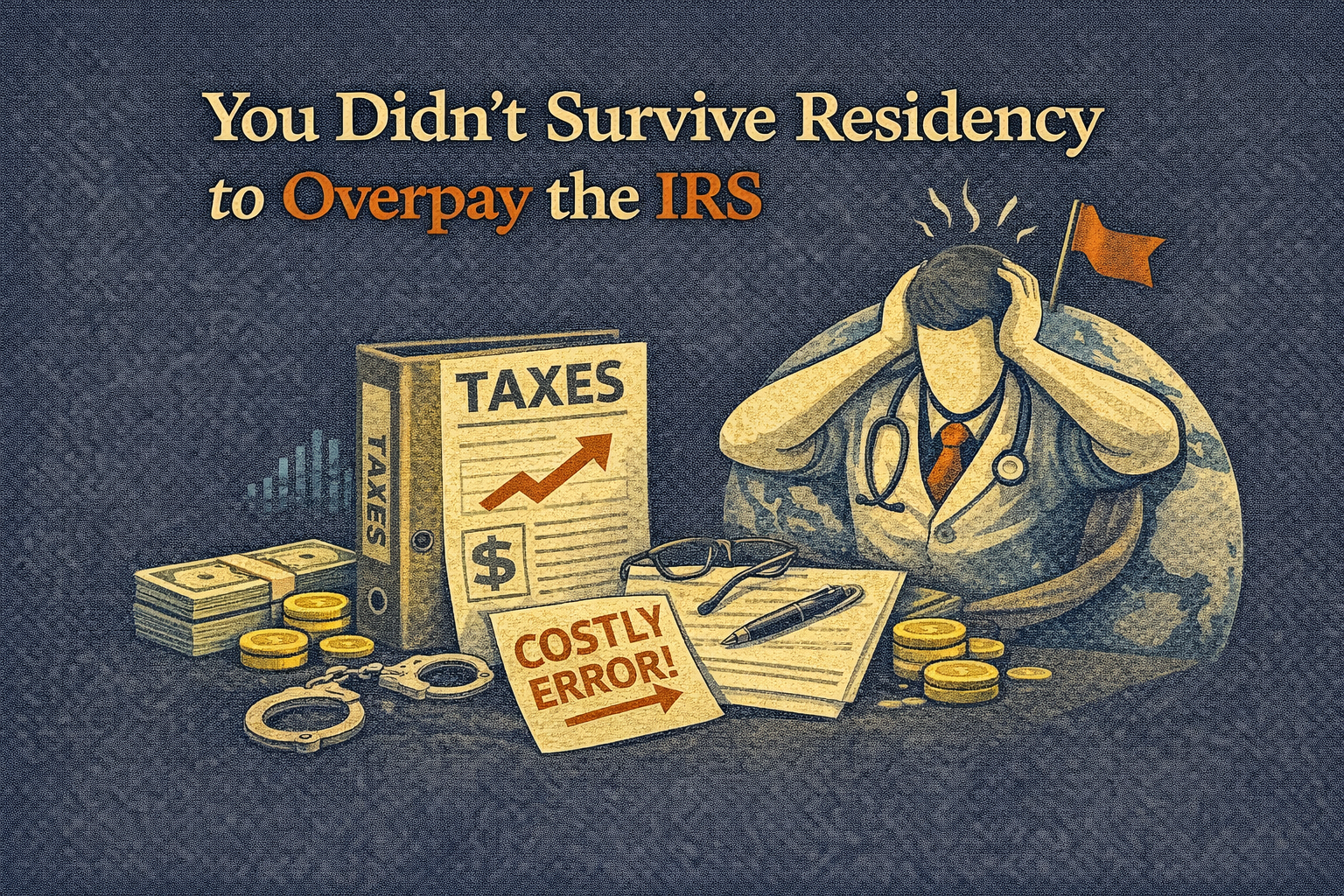
I’ll keep this blunt. Seventy-five percent of physicians believe they pay too much in taxes. And the data says most of them are right. The average medical practice overpays between $15,000 and $50,000 every single year because of missed deductions and nonexistent tax planning. That’s not a rounding error. Over a 20- or 30-year career, that’s the difference between retiring on your terms and working three extra years because nobody told you there was a better way.
Last week, I co-hosted a live webinar with Doc Wealth, a physician-founded tax planning firm led by Dr. Mark Applegate, a board-certified emergency medicine physician who got tired of watching colleagues hemorrhage money to the IRS. We spent an hour breaking down exactly where physicians are losing money and what to do about it. The response was overwhelming. Hundreds of doctors showed up with questions. So we’re making the recording available because this information is too important to sit behind a one-time event.
Here’s what we covered.
The old CPA model, meet once in March, sign some forms, hope for the best, was never built for someone with your income and your complexity. Ninety-three percent of physicians surveyed by Doc Wealth reported poor communication and slow responses from their current CPA. Ninety-one percent said their accountant does nothing beyond filing. No planning. No strategy. No conversations about entity structure, retirement optimization, or how to handle multi-state income from locum assignments.
We walked through a real client case study during the webinar. A hospitalist earning $525K, split between W-2 and 1099 income, was paying a 29% effective federal rate. After Doc Wealth restructured her entity, set up proper retirement vehicles, implemented cost segregation on a real estate investment, and identified overlooked business deductions, her annual tax savings hit $127,000. All IRS-compliant. All documented. All strategies that her previous accountant never mentioned.

The webinar covered the specific levers most physicians don’t know they can pull: S-Corp elections that eliminate tens of thousands in self-employment tax. Solo 401(k) and Cash Balance Plans that let you shelter $200K or more per year instead of the $23,500 your hospital plan caps you at. The Augusta Rule, which lets you rent your own home to your business for up to 14 days tax-free. Home office deductions for telemedicine. Business expense write-offs for travel, lodging, CME, and malpractice coverage. And the compounding effect that makes all of it matter: $40,000 saved annually, invested at 7% over 30 years, grows to $3.8 million. That’s not hypothetical. That’s math.
Doc Wealth operates differently than your typical accounting firm. Their team includes tax attorneys, CPAs, and enrolled agents under one roof, all focused exclusively on physicians. They offer year-round planning, not just April panic. They handle entity formation, bookkeeping, payroll, and customized tax strategy. And they’re recommended by White Coat Investor, Prudent Plastic Surgeon, and, of course, Physician on FIRE. Their clients consistently report saving $40,000 to $200,000 per year depending on income level and complexity.
I’ve said it before and I’ll keep saying it: there are two ways to build wealth. Earn more, or keep more of what you already earn. Most of you can’t add more clinical hours without losing your mind. But you can stop writing checks to the government that you were never required to write.
Watch the recording. We’re making the full webinar, “Don’t Let Taxes Be Your Biggest Expense in 2026,” available for a limited time. Register below to get the link sent to your inbox. If you’re a physician earning $200K or more, you owe it to yourself to spend one hour learning what your CPA should have told you years ago.
[Register here to watch the recording →]






4 thoughts on “You Didn’t Survive Residency to Overpay the IRS”
That’s a solid reminder—optimizing taxes is often the easiest win compared to grinding more hours. Definitely worth spending time to understand what you might be overpaying. Funny how it’s like in a way—once you learn the mechanics properly, you realize there were simpler, smarter ways to play all along.
Is there a replay of the webinar? I was unable to attend it.
Thanks
You’re using AI to write this. Why would one go to your website and use your resources if they can get the same information from Chat GPT, and tailored to the individual?
John, that’s a legitimate question and you deserve a straight answer.
First, to be clear: I wrote that article myself.
You’re right that ChatGPT can generate tax strategies and frameworks. It can do that well. But here’s the actual gap: ChatGPT doesn’t have years of hands-on experience vetting specific firms against real physician outcomes, and it has zero accountability when those recommendations fail.
PoF’s value isn’t the information—it’s the vetting and the accountability. I’ve worked extensively with Doc Wealth, reviewed their work with actual physician clients, and seen the outcomes firsthand. My reputation is on the line when I recommend them. ChatGPT can tell you “find a good tax firm,” but it can’t tell you “this firm specifically has handled complex multi-state income situations and here’s what the results actually looked like.”
The curated resources we maintain—the calculators, the vetted advisor list, the insurance reviews, the actual working relationships with firms that deliver—that’s not something you can replicate by asking an AI a good question. That requires years of operating in healthcare finance, failing at some things, succeeding at others, and doing real due diligence on the people and firms we recommend.
If you came to PoF, worked with Doc Wealth because of our recommendation, and they failed to deliver, you’d have recourse. You’d contact us. ChatGPT has no stake in making that right. That’s the difference.
That said, your question is important enough that more creators should answer it honestly. Appreciate you asking it.