Originally published at Millennial Revolution
For most of my adult life, I thought freedom meant depending on no one.
That’s why I choose to quit my stressful job and travel the world in my 30s. Obsessively saving and investing was the key to finally not have to answer to anyone. I had no boss, no commute, and no home. I had zero obligations.
Having grown up with little control over my life, this was a huge relief. I’d spent most of my childhood, trying to meet other people’s expectations, and much of my career doing things I disliked for money.
When I finally escaped, autonomy felt like wealth. And once I had it, I never wanted to give it up. I became fiercely protective of my freedom and that was one of the reasons I resisted having a child for so long.
I knew what children required: time, repetition, responsibility, surrendering control over your own schedule. After spending years building a life where nobody could tell me where to be or what to do, parenthood looked less like an expansion of my life and more like voluntarily giving some of that freedom back.
I was also afraid of passing down my generational trauma. What if I became controlling, resentful, or trapped? What if having a child pushed me back into a life built around everyone else’s needs?
For years, being childfree felt like the safer choice.
Then my father-in-law said something that changed the way I thought about it.
He wanted grandchildren, but he told my husband and I that even if we never had children, he would love us unconditionally.
There was no guilt, no reminder of what parents are “owed” and no suggestion that we would disappoint him if we chose differently. He loved us either way.
Ironically, being given permission not to become a parent made it easier for me to choose to become one.
And when I did, I got exactly what I had feared.
Obligation.
Make lunch, change another diaper, then read the same bedtime story for the 30th time. Go to the playground and stand around for hours while my kid investigates a bug.
What the hell had I done? I had traded a life where I could wake up and spontaneously fly anywhere for a life where someone urgently needed me to peel a banana.
It was repetitive, boring, and relentless. But ever so slowly, I started noticing the returns.
A kiss and a hug in the morning, completely unprompted. My son spotting me at daycare and running toward me so fast he nearly knocked over another child. The way he always wants to be near me. The things he remembers that I taught him. Giggling at my stupid jokes like I’m the funniest person in the world.
It occurred to me this didn’t come out of nowhere.
All those boring tasks I gave up my freedom for were deposits into a relationship that gradually compounded into love.
As someone who has spent most of her adult life writing about money, I should have recognized the mechanism.
We understand compounding instinctively–invest a small amount every month, keep going even when it feels hard, continue for decades. At first, the progress barely registers, but overtime the power of compounding becomes obvious.
Relationships work the same way, except there is no brokerage account showing you that the balance went up. And because the payoff can take decades to become visible, it’s easy to mistake these deposits for chores.
Cook dinner. Drive your kids to school. Help someone move. Sit beside a friend when there’s nothing you can do to fix what’s happening.
I understood this much more clearly when my father-in-law was dying.
He had spent his life giving love freely, without keeping score. And when he could no longer give anything back, people came.

He could’ve paid for professional caregivers to help him. But it wasn’t money that made his daughter lovingly trim his nails and massage his feet. Money didn’t make his son clean him after he could no longer go to the bathroom by himself. Money didn’t make his wife coordinate an increasingly complicated web of in-home care, arrange for family from Hong Kong to see him one last time, and sit beside his hospice bed until the end.
At that time, I was nine months pregnant, sleeping poorly, and stressed out about becoming a new parent. It was not easy being available 24/7 for caregiving, losing whatever small amount of freedom I had left.
I was there because my husband needed me. Love is inconvenient, and that’s a part of the point.
More than 200 people came to my father-in-law’s funeral. By then, he had nothing left to offer any of them. No money he could use to impress them, no favours he could perform, and no career advantage he could provide. Eventually, not even the ability to take care of himself. But they came anyway.
It made me realize that money has limits.
It can buy you security, time, and the freedom to leave a job. It can help you get out of an abusive relationship and escape a life that is making you miserable.
But it can’t buy you love.
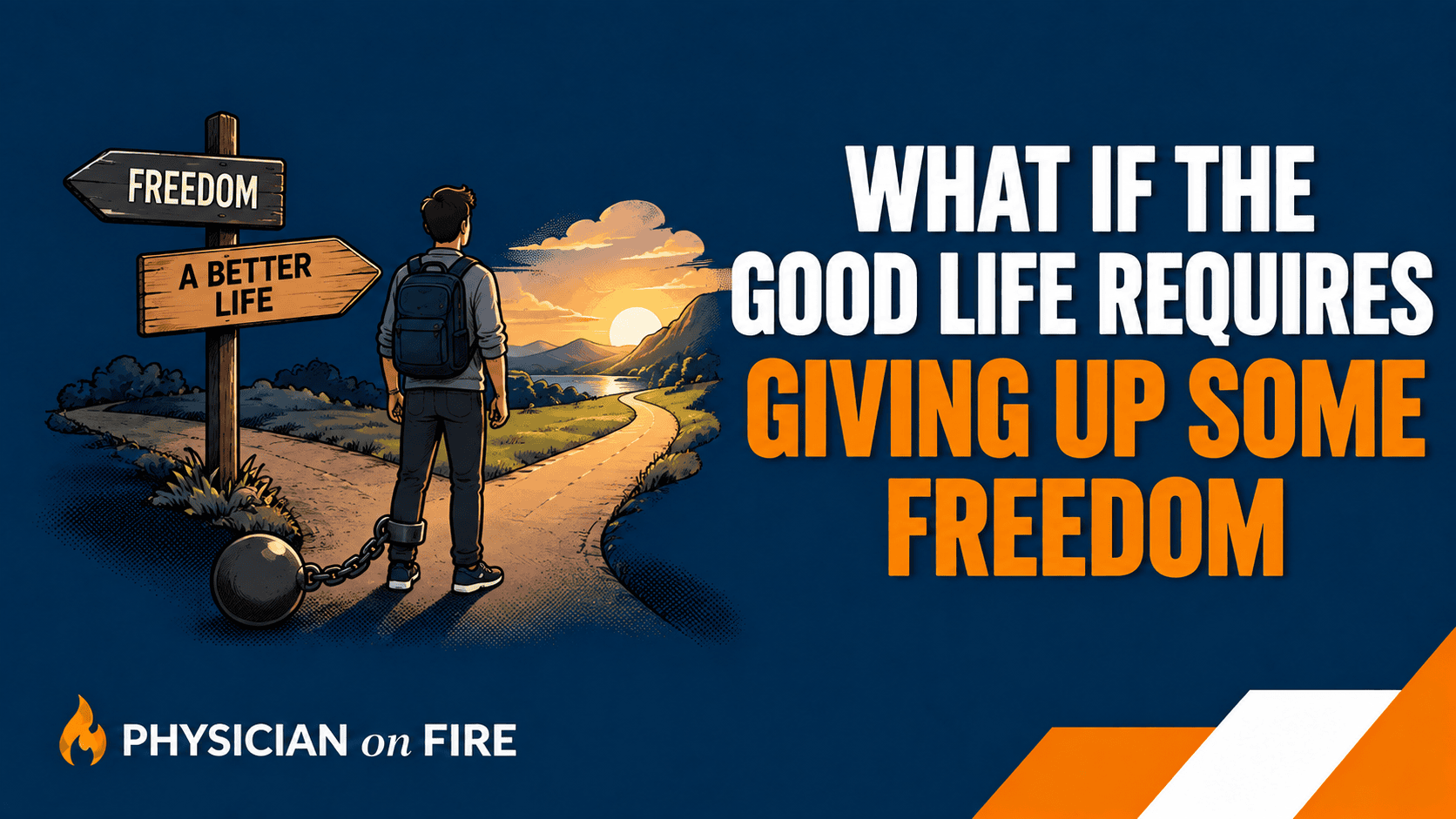
Once you gain freedom, you have to decide what to use it for.
When you have enough to walk away from the things that hurt you, building a life without obligation, without anyone ever needing anything from you may not make you happier.
The difference is whether obligation is imposed or freely chosen because someone matters to you.
Financial independence taught me that money gives you the power to choose. And parenthood taught me that one of the things worth choosing is, ironically, obligation. Not the kind where someone says, “I raised you, therefore you owe me”, but the kind where you show up because someone matters to you, even when it costs time, convenience, or freedom.
This isn’t about having children as an elder-care strategy. Nobody owes you love because you raised them. I’m talking about something broader: the relationships we spend decades building with children, partners, family, and friends.
Because one day, if we’re lucky, we will be old. Maybe 80. Maybe 90.
Our bodies will stop cooperating, our careers will be over, and whatever status we accumulated will become irrelevant.

Money can buy us a comfortable home and medical care. It can hire someone to cook for us, change our sheets, and help us use the bathroom.
But care isn’t the same as caring.
You can’t buy the years that make a daughter want to gently wash your hair, or a son to clean you up without making you feel ashamed.
You can’t buy a friend who has known you for 40 years and still plays Settlers of Catan with you when you can barely tell wheat from sheep.
By 80, it may be too late to start building those relationships.
If someone comes when you are old, sick, tired, and have nothing left to give, it won’t be because of something you did that week. It will be because of thousands of boring, ordinary moments, repeated for decades.
Some obligations are how relationships are built: Make lunch, read the story again, show up when it’s inconvenient. The early deposits don’t look impressive, but neither does investing $500 a month when your portfolio is tiny. The magic only becomes obvious after years of consistency.
Financial independence can buy back your time. What you do with that time is up to you. But some of the best returns may come from giving it to the people you love. Just like wealth, love compounds too.