


A common retirement game plan for physicians goes something like this: sell the lake house, buy a condo in Scottsdale, and then play golf until your knees give out. Which is fine, of course. But it’s also kind of a waste of everything you’ve earned.

Retiring as a doctor in 2026 means that your financial position gives you options that most retirees don’t have.
A typical retired physician household draws annual income from a mix of 401(k) withdrawals, taxable brokerage accounts, and Social Security, with the portfolio share typically covering 40–70% of total spending and Social Security covering the rest.
You can expect a pretty comfortable budget nearly everywhere in the world. In several places on this list, it’s even a luxurious one.
Let’s take a look at 5 destinations that are drawing a growing number of retired Americans. We’ll take a look at what they actually cost, the tax picture, the experience, and what you need to know before you book anything.
Foreign Earned Income Exclusion and International Taxation for U.S. Citizens
The U.S. taxes its citizens on worldwide income, no matter where they live. If you’re a U.S. citizen or resident, you’re generally required to file income tax returns and pay estimated tax in the same way as those residing in the United States, even from a café in Lisbon or a ryokan in Hokkaido.
The good news is that the Foreign Earned Income Exclusion (FEIE) lets working expats exclude a meaningful chunk of foreign wages.
For tax year 2026, the maximum FEIE exclusion is $132,900 per qualifying person. The bad news for retired physicians is that passive income (like dividends, interest, capital gains, most rents, and pensions) does not qualify for the FEIE and generally remains taxable on your U.S. return.
Retirement income doesn’t get excluded either. You’ll need to lean on the Foreign Tax Credit instead, and in most cases work with a cross-border CPA.
U.S. citizens must also file FinCEN Form 114 if their combined foreign financial accounts exceed $10,000 at any point during the year.
That’s a low bar, and most retired physicians traveling or living abroad will cross it. FBAR covers foreign financial accounts with an aggregate balance of $10,000 or more; Form 8938 under FATCA requires reporting of broader asset types, with higher thresholds ($200,000 or more at year-end for a single filer living abroad). These are separate requirements, and you’ll file both if you qualify for both.
Finally, Medicare does not travel with you.
Original Medicare (Part A and Part B) is designed for healthcare services within the U.S. and its territories and does not cover medical costs incurred abroad. You’ll need international health insurance with good plans costing $1,000–$8,000/year, depending on coverage, or access to the local system, which several of these countries offer.
Now, let’s take a look at possible travel destinations:
1. Portugal
According to travel advisor Kara Simmons, founder of Ready, Set, Booked, the Portuguese coastline between Lisbon and Porto, is one of the top destinations for retired boomers this year. “It is walkable, safe and English-friendly,” she says, “with beautiful beaches, charming medieval towns, and plenty of golf courses.”
Simmons estimates you can stay at great boutique properties and spend under $5,000 per couple for a weeklong trip, with the best deals in April or May when you can beat summer crowds and save 20%–30% overall.
A budget for 2 people for one week looks something like this:
- Flights: $1,200–$1,600 (round-trip from major U.S. cities)
- Boutique hotels/guesthouses: $1,200–$1,400
- Food and wine: $700–$900
- Transportation: $200–$300
- Activities and tours: $200–$300
- Total: $4,200–$4,800
What You Can Do There
|

|

|

|
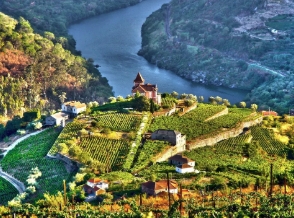
The Douro Valley, a 90-minute drive from Porto, is one of Europe’s most spectacular wine regions, with terraced quintas offering private tastings and vineyard lunches that run half of what you’d pay in Napa.
Portugal’s wine culture goes well beyond port; the Douro Valley offers some of Europe’s most spectacular vineyard landscapes, while Vinho Verde provides refreshing tastings perfect for warm afternoons. Food experiences here reveal regional specialties that vary dramatically from north to south.

Fado is worth going out of your way for. It’s a genuinely distinct Portuguese art form built around the concept of saudade, a kind of nostalgic longing that doesn’t have a clean English translation.
Fado venues expect silence during performances; talking disrupts this tradition. Book a proper fado house in Lisbon’s Alfama neighborhood rather than a tourist dinner show. Sintra (a 40-minute train ride from Lisbon) features Romanticist palaces, Moorish ruins, and castle walls in a UNESCO World Heritage hillside. Day trips to the medieval walled town of Óbidos or the pilgrimage town of Fátima are straightforward by car or coach.
The Tax Picture
For physicians who’ve been eyeing Portugal as a longer-term base, it’s important to know that the landscape shifted significantly in 2024–2025.
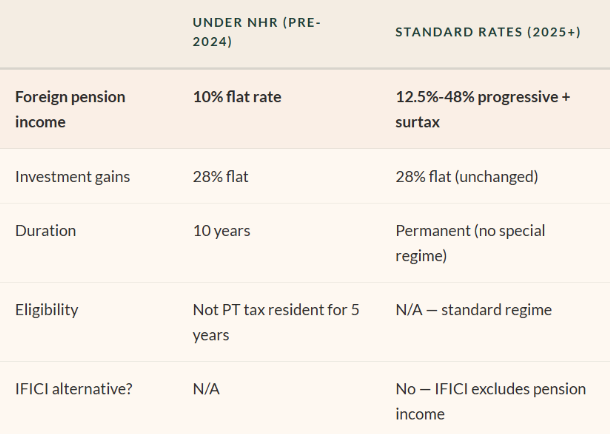
Portugal’s Non-Habitual Resident (NHR) regime, which offered a flat 10% tax on foreign pension income for 10 years, ended for new applicants on January 1, 2024. Its replacement, IFICI, targets researchers and tech professionals rather than retirees.
If you registered for NHR before that cutoff, your benefits continue for the remainder of your 10-year window. If you didn’t, you’re looking at a very different situation.
New retirees face standard progressive rates of 12.5% to 48%, plus a solidarity surtax bringing the effective top rate to 53%.
The U.S.-Portugal income tax convention (in force since 1996) provides pension protections under Article 20, which assigns private pension taxation to the country of residence, and Article 25, which ensures Foreign Tax Credits prevent double taxation.
Portugal does not recognize Roth IRA tax-free status, which means growth on distributions is taxed as pension income at progressive rates, though original contributions are exempt under the Portuguese IRS code.
Brokerage account access is another landmine, as many major U.S. brokerages, including Fidelity, Merrill Lynch, and Edward Jones, restrict or close accounts for non-U.S. residents. This means you’ll have to transfer to a broker that serves Americans abroad (like Interactive Brokers or Charles Schwab International) before you establish foreign residency.
The D7 visa remains very accessible. It requires just €920/month in passive income, and pension income qualifies. That’s a low bar for most retired physicians.
Caveats
Check your NHR eligibility status before building any tax strategy around Portugal. A retired physician with a $2M portfolio at Fidelity who establishes Portuguese residency without transferring accounts first can find those accounts frozen or closed with little notice.
Also keep in mind that rents are on the rise in Lisbon and Porto.
Alternative hubs like Coimbra and the Algarve offer lower costs for those willing to look beyond the main cities. And while English proficiency is high in urban areas, learning basic Portuguese is necessary for daily interactions in smaller towns.
Who This Is For
Portugal is the right call for the physician who wants a full European base without the overhead of France or Italy. Someone who values walkable cities, good wine, excellent seafood, a sizable English-speaking expat network, and a pace of life that genuinely counteracts 30 years of 6 a.m. rounds. It’s particularly well-suited for those who want a lower cost of living without sacrificing quality.
Hokkaido, Japan
Hokkaido, specifically Shiretoko National Park, is a top pick for retirees who love national parks and hot springs. It’s virtually untouched wilderness with significant wildlife sightings. Outside peak season, it runs under $5,000 per couple for a week.
Traveling in September or October can save you 15%–25% on total costs.
A budget for 2 people for one week looks something like:
- Flights: $2,000–$2,400 (round-trip from the U.S.)
- Hotels and traditional inns: $1,200–$1,400
- Food: $700–$900
- Rail passes and transport: $300–$400
- Activities and park entry: $200
- Total: $4,500–$5,000
What You Can Do There

|
|

|

|
Hokkaido is special because of its four distinct travel zones: the Sapporo Area (urban attractions, food, shopping, nightlife); Central Hokkaido (mountain landscapes, hiking, hot springs); Southern Hokkaido (history, culture, scenic towns); and Eastern Hokkaido (wildlife, lakes, untouched nature).
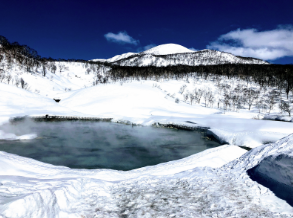
The onsen (a traditional Japanese hot spring and the bathing facilities built around it) culture alone is worth the flight. Noboribetsu and Lake Toya are the most accessible for first-timers — soaking in volcanic hot springs while watching snow fall is the kind of experience that doesn’t have a domestic equivalent.
Teshikaga Town is where visitors can see Lake Mashu, one of the world’s clearest lakes, and Lake Kussharo, Japan’s largest caldera lake, with Akan Lake Onsen, boat tours, and red-crowned crane observations nearby.
Beyond the natural scenery, Hokkaido is known for its local cuisine which features fresh seafood, dairy products, and Sapporo’s famous ramen and beer.
The Sapporo Snow Festival in February draws 2 million visitors; the early September lavender bloom at Furano is arguably more photogenic and far less crowded. To fully cover Hokkaido’s major highlights, an 8–14 day itinerary is ideal.
The Tax Picture
According to April 2026 data from Numbeo, the overall cost of living in the U.S. is about 45% higher than in Japan, with rents in Japan nearly 69% lower. Japan’s healthcare system ranked 13th among 110 nations in a 2025 CEO World Magazine study.
The national insurance system provides universal access, with insured individuals covering 30% of medical costs (including appointments, hospital visits, and prescriptions) while the government covers the remaining 70%.
However, Japan does not offer a dedicated retirement visa for general foreign retirees. You’ll need a different non-working visa, designated activities, family ties, or a pathway toward permanent residency.
Repeated 90-day tourist entries are not a sustainable long-term strategy; immigration officers can deny entry if they believe you’ve spent too much time there without proper status.
Japan taxes all residents on their worldwide income after 5 years of residence. The Japan-U.S. Tax Treaty helps prevent double taxation for American retirees, but Social Security income may be taxable in both countries depending on treaty provisions. In years 1–4, you have some buffer. Year 5 and beyond, the exposure piles up quickly.
Currency risk is a factor as well. The JPY can fluctuate 10%–20% or more within a year. Stress-testing your budget using a conservative rate like JPY130 per USD is advisable.
Some Cultural Differences For First-Timers
Tipping in Japan can accidentally send the wrong message. Servers have been known to chase visitors down the street to return “forgotten” money. Don’t tip anywhere, for anything, under any circumstances. It’s a matter of respect.
Onsen are a wonderful cultural experience, but you’re expected to get thoroughly clean with soap and warm water at the sit-down showers before entering. Many onsen still don’t allow visible tattoos, so if you have them, look for private baths or ryokan with personal onsen options. This isn’t negotiable at traditional establishments.

Cash still rules outside major cities. Card usage is more widespread than a few years ago, but cash is still king, particularly outside Tokyo, so carry plenty and keep notes crisp and fold-free, as if new. ATMs at 7-Eleven and Japan Post are the most reliable for foreign cards.
Japan also has many culturally unique social customs. Removing shoes when entering homes, bowing in greeting, and keeping voices low in public come naturally to Japanese people but can feel like a whole new world for the unaccustomed traveler.
Public spaces like trains, restaurants, and waiting rooms are quiet by design. Loud conversation marks you immediately as foreign, and not in a charming way.
Caveats
Language is can be a friction point. English signage has improved in Sapporo, but rural Hokkaido operates almost entirely in Japanese.
A translation app and downloaded offline maps mean the difference between a smooth trip and a genuinely stressful one. For most retired physicians, Hokkaido makes more sense as an extended visit (4–8 weeks) rather than a primary base.
The visa pathway to long-term residency exists but requires planning well before retirement, not after. Foreign retirees in Japan typically incur extra costs for global tax filing, inheritance planning, attorneys, and visa renewals with most experienced providers based in Tokyo, Osaka, and Fukuoka.
Who This Is For
If you read nature travel guides the way other people read thrillers Hokkaido is for you. It’s for those who want hot springs, pristine wilderness, world-class seafood, and a culture so different from American medicine that the decompression is almost guaranteed.
Japan is consistently described by travel specialists as “the cleanest country they’ve ever traveled in,” combining safety and security with its unique cultural offerings. It rewards curiosity and punishes people who want everything to work like it does at home.
If that trade-off sounds energizing rather than exhausting, Hokkaido will be one of the best trips you’ve ever taken.
Costa Rica
Costa Rica’s Central Valley is another popular destination, just a short flight from the U.S., extremely budget-friendly, with a slower pace of life, lush coffee plantations, and eco-lodges. Traveling between May and November lets you avoid the peak tourist rush and save 30%–40% on lodging and activities.
A budget for 2 people for one week entails:
- Flights: $800–$1,000 (round-trip)
- Eco-lodge or boutique hotel: $1,000–$1,200
- Food: $500–$700
- Car rental or transfers: $300–$400
- Excursions: $300–$400
- Total: $3,800–$4,300
What You Can Do There

|

|
|

|
Costa Rica is home to about 5% of the world’s biodiversity despite its small size, making it perfect for wildlife enthusiasts. Manuel Antonio National Park puts sloths, capuchin monkeys, and scarlet macaws within walking distance of the beach.
The Monteverde Cloud Forest (one of the most biodiverse regions on the planet) is accessible on guided night walks where you’re likely to see species that don’t exist anywhere else.
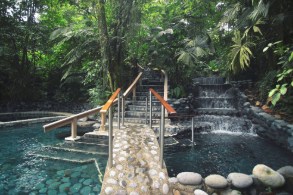
Arenal Volcano anchors the northern highlands, with hot springs and canopy tours that have no age limit and minimal physical prerequisites.
Coffee tourism in the Central Valley is legitimately excellent. Naranjo and the Poás Volcano region offer working farm tours with tastings of single-origin beans pulled that morning — another experience you’d be unable to find domestically.
Surf lessons are available at any experience level on both the Pacific and Caribbean coasts.
Costa Rica offers a unique cultural experience centered around the “pura vida” lifestyle, a philosophy emphasizing living life to the fullest and appreciating simple pleasures, creating a relaxed and joyful atmosphere that permeates daily life.
The Tax Picture
For physicians specifically, Costa Rica has the most straightforward tax treatment of any destination on this list. For retirees on the Pensionado or Rentista visa, Costa Rica does not tax pensions or income earned abroad, including U.S. Social Security income.
Thanks to Costa Rica’s territorial tax system, U.S. Social Security, pensions, and foreign investments remain untaxed locally. Costa Rica is also 25.5% lower in overall cost of living and 42.8% lower in rent than the U.S., per Numbeo.
The visa options are physician-friendly. The Pensionado requires a guaranteed lifetime pension of at least $1,000/month, easy for most retired physicians. The Rentista visa requires a demonstrated stable income of $2,500/month from investments, rental income, or other passive sources. Current legislation provides tax and customs incentives, including tax-free importation of household goods, up to two vehicles free of import taxes, and exemption from Costa Rican income tax on foreign pension income.
However, it’s important to confirm the current status before shipping anything, as these provisions come and go.
With legal residency, retirees can enroll in CAJA, Costa Rica’s public healthcare system. Costa Rica’s universal healthcare system ranks 47th in the 2025 CEOWORLD Health Care Index, placing it in the top 25% of countries worldwide.
Private clinics are available and affordable.
Important Note: There’s no U.S.-Costa Rica tax treaty, which means no treaty-level protections against double taxation. You’ll rely on the Foreign Tax Credit. Given Costa Rica’s territorial system, this typically produces minimal double-taxation situations for retirees with foreign-sourced income.
Caveats
Petty crime has increased over the past decade, and locals tend to avoid going out after dark. That said, Costa Rica ranks 54th globally on the 2025 Global Peace Index, while the U.S. ranks 128th. Standard urban precautions apply, particularly in San José and beach towns with high tourist concentrations.
Road conditions outside San José vary from acceptable to genuinely rough.
Many expats with cars use 4WD, which is a must during the rainy season anywhere outside the capital. Opening a local bank account (required for the residency visa process) involves strict anti-money laundering documentation and can take longer than expected.
Who This Is For
Costa Rica is for the physician who wants warmth, nature, proximity to the U.S. (a 3–5 hour flight from most major hubs), a genuinely favorable tax setup, and a lifestyle that makes retirement feel like a conscious choice rather than a consolation.
In the 2023 InterNations Expat Insider survey, Costa Rica ranked 7th globally for overall expat satisfaction, with particularly strong scores for quality of life and ease of settling in. The Pensionado visa is the easiest retirement path on this entire list. The territorial tax system is the cleanest. It is not for the physician who needs constant urban stimulation or resists learning any Spanish.
Egypt
Egypt is the outlier on this list. With the Egyptian pound worth roughly $0.019 USD, prices for those with American pensions are extremely low. Rent for a three-bedroom apartment in central Cairo runs roughly $469/month, and dinner for two at a mid-level restaurant costs around $10.
Egypt has become a leading retirement-age travel destination, and operators like AmaWaterways now structure trips as hybrid land-and-river itineraries. U.S. News notes that numerous types of Nile river cruises are available; journeys vary in length, and some even offer hybrid land-and-river itineraries.
A budget for 2 people staying for 10–14 days looks something like this:
- Flight: Often included in guided packages; $900–$1,200 independently
- Cruise and land tour packages: $4,000–$4,800 (10–14 days)
- Incidentals and tips: $300–$400
- Entry fees for major sites (Pyramids, Valley of the Kings): $20–$45 per person
- Total: $2,500–$3,500 (independent); $5,000–$5,800 (guided package)
What You Can Do There
 Valley of the Queens Valley of the Queens |
|

|

|
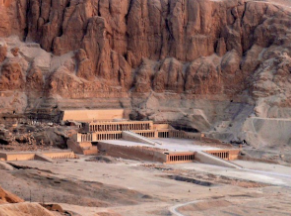
Thinking of Egypt conjures up images of the Pyramids, though that’s not all there is to it. Luxor, once the ancient city of Thebes, has more temples and tombs than anywhere else in the country, including the Valley of the Kings, Valley of the Queens, the Karnak and Luxor temples, and the Temple of Hatshepsut.
A single day in Luxor covers more documented human history than most people will encounter in a lifetime.
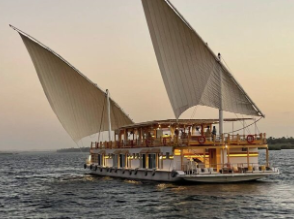
A traditional Dahabiya sailboat is an increasingly popular option for a private, eco-friendly journey between Luxor and Aswan, a slower-paced cruise that allows for an intimate connection with the Nile’s scenery and historical sites.
Unlike large motor cruisers, Dahabiyas carry fewer than 20 passengers and stop at smaller villages that don’t make standard tour itineraries.
The Grand Egyptian Museum in Giza (one of the largest archaeological museums in the world) is fully operational in 2026, with the complete Tutankhamun Exhibition now on display.
A hot air balloon ride over Luxor’s ancient sites currently costs around $120–$180 and offers one of the more genuinely surreal perspectives available anywhere on the planet; however, it’s advised to book only through licensed operators, given the State Department’s noted history of fatal balloon accidents in the area.
Lesser-known sites include Dahshur with the Bent Pyramid, El Minya’s tombs, the White Desert National Park, and Siwa Oasis, all authentic experiences well away from the main tourist crowds.
The Tax Picture
Egypt has no formal retirement visa. U.S. citizens can obtain a 30-day tourist visa on arrival at Egyptian airports for approximately $30 in exact U.S. cash, or a multiple-entry visa for approximately $60.
For longer stays, options thin out significantly. Egypt has no tax treaty with the U.S., no formal pension exemption, and extended stays crossing 183 days could theoretically trigger Egyptian tax residency, though enforcement mechanisms for tourists are limited in practice.
For most retired physicians, Egypt makes the most sense as a 10–14 day guided tour or Nile cruise. But if you are planning to stay longer, don’t freelance the planning on the tax side.
Cultural Differences That Matter
Egypt is a majority-Muslim country, and the cultural framework that flows from that is present everywhere outside resort hotels. The general dress rule is to cover your shoulders and knees in all public spaces. At active mosques, women must cover their hair with a headscarf when entering. This is standard practice across the country, not selective enforcement at tourist sites.
Tipping is embedded in the service economy, roughly 10%–15% in restaurants, and 5–100 Egyptian pounds for small services is standard practice. Unlike Japan, where tipping offends, in Egypt it’s genuinely expected and shapes the quality of service you receive.
Locals frequently invite visitors to share tea and conversation, accepting is a sign of respect, and declining repeatedly can come across as cold.
The Egyptian concept of hospitality runs deep, and engaging with it, rather than treating every interaction as a potential scam, tends to produce the most memorable experiences. Vendor pressure at major sites is persistent.
Firm but polite boundaries help you manage the energetic atmosphere at places like the Pyramids and Luxor. A standard polite “no” comes in handy but use it without escalating.
Caveats
Egypt is currently classified under U.S. State Department Level 2: Exercise Increased Caution — the same advisory level applied to countries like France and Belgium.
Visitors are advised to avoid North Sinai, areas along the Libyan and Sudanese borders, and certain desert regions. Key tourist destinations like Cairo, Luxor, Aswan, and Red Sea resorts are considered safe when standard precautions are taken.
The State Department notes that appropriate medical care is available only in or near major cities or tourist areas, and urgent medical treatment options are limited outside those zones. Emergency evacuation coverage in your international health insurance is not optional.
Summer temperatures regularly exceed 100°F, making the October–April window strongly preferable for active sightseeing.
Who This Is For
Egypt is for the physician with a serious curiosity about history, someone who’s read about ancient medicine, wants to stand inside the structures rather than look at them on a screen, and is comfortable engaging with a culture that operates on genuinely different social norms. It rewards intellectual engagement more than any other destination on this list.
It is emphatically not for the physician who needs reliable emergency infrastructure everywhere they go, is uncomfortable with conservative social norms, or wants the ease and predictability of a Western European trip.
The sweet spot is to go for 10–14 days on a structured tour, stay in quality hotels in Cairo and Luxor, and let a licensed guide earn their fee.
European Christmas Markets
This one’s the clearest in terms of logistics. Travel expert Bobby Laurie has tracked a major surge in retirees traveling to European Christmas markets, both by land and river cruise. Many report no longer wanting warmer destinations, preferring the holiday spirit, the shopping, and temperate weather instead.
As a U.S. citizen, you can travel through the entire Schengen Area for up to 90 days within any 180-day period without a visa. That covers Germany, Austria, France, the Czech Republic, Belgium, and most of the markets worth visiting. No paperwork. No residency implications. No foreign tax exposure on a short trip.
A budget for 2 people for one week entails:
- Flights: $1,200–$1,600
- River cruise or hotel stays: $2,000–$3,000
- Food: $600–$800
- Trains and transfers: $300–$400
- Tours and experiences: $300
- Total: $4,500–$6,000
What You Can Do There

|
|

|

|
Strasbourg’s market has been running continuously since 1570, standing in front of the Notre-Dame with a vin chaud on a December evening is one of those experiences that’s difficult to make disappointing.
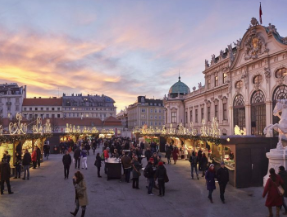
Vienna spreads its markets across multiple locations, including in front of the Rathaus (City Hall) and the Baroque Belvedere Palace, each with a distinct character.
Nuremberg’s Christkindlesmarkt, operating since 1628, is pedestrian-only and draws roughly 2 million visitors over its run. Prague offers the most dramatic backdrop at the lowest cost. You can expect to spend 30–40% less than the equivalent of Western European destinations, with a favorable dollar-to-koruna exchange rate on top.
River cruises on Viking, AmaWaterways, and Avalon run dedicated Christmas market itineraries along the Danube and Rhine, moving between cities overnight so you wake up at a new market each morning. Beyond the markets, the cultural access is exceptional.
The Vienna State Opera has same-day standing-room tickets for under €15. Prague’s National Theatre offers world-class opera and ballet at a fraction of Western European prices.
The Tax Picture
Tax implications for a short December trip are functionally zero. You’re a U.S. tourist spending leisure dollars. Your retirement income stays taxable in the U.S. as normal. No foreign tax exposure, no FBAR implications from a short trip, no visa paperwork.
This is the Aspartame of retirement destinations — all sweet, no stress.
Caveats
December is peak season, which means accommodation prices spike 30–50% above normal, and river cruise cabins with good deck views sell out months in advance. It’s best to book river cruises by July. Prague is the value option here, still atmospheric, genuinely beautiful, and meaningfully cheaper than Vienna or Nuremberg.
Prague is also the most underrated city on this entire list for physicians who want culture, history, and world-class music at honest prices.
However, watch out for pickpockets in high-traffic market areas, particularly in Prague and Vienna, as it’s Europe’s most prevalent petty crime and spikes sharply in December crowds.
Who This Is For
This is for the physician who wants a defined, time-limited, high-reward trip without the complexity of visas, foreign healthcare systems, or significant logistical uncertainty. It’s the right trip for the couple who loved Europe in their 40s and want to revisit it with the time and budget to do it properly, with good hotels, a river cruise, unhurried market afternoons.
No tax complications, and no FBAR implications. Just a genuinely beautiful December in Central Europe, booked well in advance, with good shoes and a warm coat.
Final Thoughts
If you’re a retired physician drawing mostly from taxable accounts, 401(k) distributions, and Social Security, FBAR filing is mandatory if any foreign account, or the combined value of all foreign accounts, exceeds $10,000 at any point during the year. Form 8938 kicks in separately and has higher thresholds: $200,000 for a single filer living abroad on the last day of the year, or $300,000 at any point during the year, with thresholds doubling for joint filers.
Note that the Foreign Earned Income Exclusion does not apply to retirement income, so retirees relying on 401(k)s, Social Security, and brokerage distributions should plan around the Foreign Tax Credit instead. The IRS now cross-references FATCA reports from foreign banks with what taxpayers report on Form 8938, and mismatches trigger automated compliance letters, so missing forms are easy to detect.
It’s also important to note that several of these places are brutally hot in summer, which isn’t ignorable when you’re a retired physician in your 60s or 70s planning an extended stay rather than a 10-day vacation.
In the end, I’ll just say that you spent the better part of three decades in a system that told you where to be and when. Retirement is the part where you get to decide.
P.S. Have you spent time in any of these places? Did you come back raving or with a list of grievances? I’d love to hear from you. After all, the best travel wisdom for retired physicians comes from other physicians who’ve actually been there.
P.P.S. If you think I missed an obvious one, a place that makes Portugal look overcrowded, Costa Rica look expensive, or Hokkaido look boring, let me know! Is there a spot out there that blows these out of the water?







2 thoughts on “Travel Destinations That Make Sense After 30 Years of Saving Lives”
US Tax treaty with Egypt: https://www.irs.gov/businesses/international-businesses/egypt-tax-treaty-documents
I think the food budget portrayed here is WAYYY less than the average physician eating; let alone a physician/spouse