


The tragedy of modern ambition is that exhaustion is a badge of honor. Workaholism is mistaken for virtue, and overworking (the very thing we were meant to escape) remains the norm even among those who once swore they’d never go back.

Online forums and discussions are filled with post after post and comment after comment that echo a desperate consensus gentium that this can’t be all there is. Professionals from all walks of life find themselves at their wits’ end, typing into the digital void, looking for confirmation that they’re not alone.
They aren’t.
Ironically, even proponents of the FIRE (Financial Independence, Retire Early) movement are feeling the burn. The movement was born as a revolt against the grind, a philosophy rooted in reclaiming one’s life from endless labor.
But somewhere along the way, the pursuit of freedom became another form of captivity. Instead of breaking free from overwork, many found themselves shackled to an even more obsessive version of it, one where they’re saving harder, hustling longer, and cutting deeper, all in the name of early escape.
This “Grind Paradox” is what happens when we spend our healthiest, most productive years working ourselves into the ground so we can one day afford the rest we’ve already forfeited. You tell yourself it’s temporary. We tell ourselves it’s necessary. But the calculations rarely include the human cost.
In case you missed it:
- Learning to Work With Intention as a Financially Independent Physician
- It’s Not Just Doctors: Working in the Time of a Burnout Crisis
- Why are Doctors Burning Out? Three Ways FIRE Can Save Us
- Physician Career Satisfaction At An All-Time Low
Physician Burnout Statistics
Overworking is as biologically punishing as it is corrosive to our mental and emotional health.
In 2021, the World Health Organization and the International Labour Organization released a joint study showing that people working 55 hours or more a week face a 35% higher risk of stroke and a 17% higher risk of heart disease compared to those working standard hours.
The study linked overwork to nearly 745,000 premature deaths worldwide— a grim reminder that the body keeps score.
Pushing for extreme savings while running physiological deficits is just going to shift the burden from your bank account to your body.
Dr. Adam Borland, PsyD, describes it more plainly: “A car doesn’t perform optimally when its gas tank is on empty. In the same way, our health becomes compromised when our physical and emotional reserves are tapped out.”
He’s right.
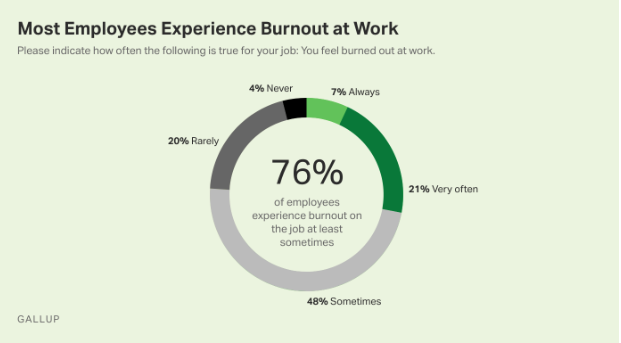
Data from Gallup found that 76% of employees report feeling burned out often or always. And among physicians, that number isn’t too far behind.
Physicians who assume their training immunizes them against these risks are mistaken because clinical knowledge does not confer biological exemption.
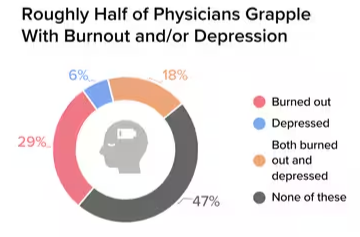
47% report burnout, according to Medscape. The same report found that doctors suffering from burnout are more likely to experience depression. “I work hard. I am depressed. I don’t eat well. I don’t exercise enough,” reported one survey respondent.
These impairments degrade clinical performance and increase the risk of error, which is itself a driver of stress and moral injury. It’s a self-reinforcing cycle, perpetuated by a culture that glorifies exhaustion while quietly diminishing its workforce’s capacity for genuine performance.
Digital presenteeism (our inability to unplug from work even when we’re home) has turned work into an always-on psychological state rather than a defined part of life.
FI, But What’s The Point?
Even those who can see the finish line aren’t immune.
A Reddit post in r/Fire reads as follows: “The ironic thing is, I’m hitting or exceeding all the financial/business oriented goals I’ve set out for myself going back well over a decade ago, but I don’t think I’ve ever been more miserable.”
The 35-year-old corporate employee continued with what most of us have felt at some point or another. “Countless nights I can’t even sleep, I just roll around in bed for hours thinking of all the things I need to do or my minds racing about all the things I’ve sacrificed over the years and how I’m wasting all the best years of my life just working – making money.”
The postindustrial economy has shifted from valuing labor to valorizing loyalty, rewarding those who remain “always available.” Overwork, then, is no longer a sign of ambition but a precondition for employability.
The culture of relentless optimization trains us to see idleness as failure and languishing as laziness. FIRE was a way to change that script. Yet, somewhere along the way, the pursuit of freedom turned into a new kind of trap.
FIRE works on compression: accelerate savings now to buy more free years later. For physicians, that often means extra shifts, moonlighting, and pushing clinical capacity beyond what’s sustainable.

Short-term income jumps look great on a spreadsheet, but they reduce recovery time, fracture sleep architecture, and raise cortisol, all of which reduce productive earning capacity over time.
The behavioral risk is substantial. The same qualities that make a physician effective, like discipline, patience for delayed gratification, and tolerance for difficult work, can become liabilities when they turn into uncompromising self-exploitation.
What the data and anecdotes agree on is that we’re not wired to sprint forever. Chronic overwork dulls reward sensitivity and shortens emotional bandwidth. The things that used to feel good, like family time, hobbies, and even small wins, start to register as noise.
“I don’t have anyone I can talk to about this,” the Redditor wrote. “I’d never expose my family to this side of me. I smile, laugh, play with my kids, and carry on throughout the day like all is well and normal.”
You can hit every savings target and still wake up with a gnawing sense of dread…all because you forgot to factor in yourself as a human person with limits.
Learn how you can Fight Career Burnout by Saving Money AND Spending Money
Grinding Towards An Early Grave
Overwork depletes your energy and youth, yes, but it also rewires the brain.
Chronic stress keeps cortisol levels elevated, impairing memory, mood, and cognitive flexibility. It’s why burned-out professionals often describe feeling “foggy,” detached, or emotionally flat.
Overworking leads to a myriad of symptoms that all stem from increased stress and anxiety.
“It’s important to try to maintain a healthy life-work balance. But this is often easier said than done,” says Dr. Borland. “If your work demands are negatively affecting your life, both in and out of your job setting, you may need to evaluate why it’s happening and what changes can be made.”
Because these negative effects ripple outward. The Cleveland Clinic notes that overworking can lead to weakened immunity, frequent illness, sleep disorders, weight fluctuation, and cardiovascular strain.
A 2023 review published in the National Library of Medicine reported that chronic overwork triggers the same stress pathways that drive hypertension, heart disease, and even immune suppression. In essence, the body begins to interpret endless labor as a form of chronic trauma.
In more severe cases, chronic overwork has been tied to depression, substance misuse, and what the Japanese call karoshi, which literally means “death by overwork.”
What began in postwar Japan has since gone global. Karoshi is no longer confined to salarymen sleeping at their desks; it’s the consultant on Slack at midnight, the physician catching up on charting at 3 a.m., the entrepreneur answering emails during dinner.
The syndrome has migrated into every high-performance sector.

Even if death isn’t literal, the metaphorical one isn’t a trifling nuisance. Experiencing the loss of joy, the attrition of identity, and the hollowness that comes when your job becomes your only mirror can turn an otherwise perfectly good life into a never-ending nightmare.
The Economics of “Enough”
Capitalism is clever. It keeps us believing that working more equals living better. But the truth is, it thrives when we don’t know what “enough” looks like. The FIRE philosophy (at its most enlightened) was never about endless accumulation. It was about liberation through sufficiency.
Learning what’s “enough” is a spiritual exercise as much as a financial one. It means defining wealth in terms of well-being, not work hours. It means asking: if I had enough money to stop today, would I even know how?

The pandemic changed a lot, not just for us but for structures around the world. Post-pandemic, it feels like “enough” has become the rarest commodity in the American psyche. The work just doesn’t end like it used to. It’s like school all over again, when we used to grind all day and then have a pile of homework to contend with once we got home.
The obsession with optimizing every minute, every dollar, every outcome is a symptom of the same disease that overworking breeds: fear. Fear of falling behind. Fear of inadequacy. Fear that if we stop, the world will forget us.
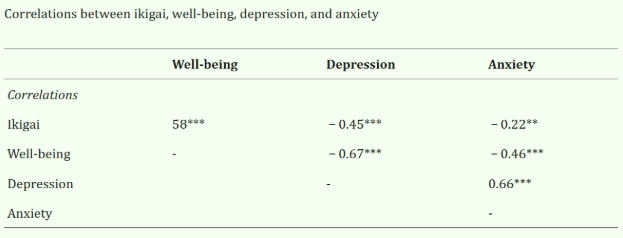
But life isn’t a race to the grave with the biggest balance sheet. The Japanese have another word worth learning: ikigai, meaning “reason for being”.
Research found that people with strong life purpose not only report higher well-being, they also experience lower depression and anxiety. And that just goes to show, freedom begins in the mind, not the market.
The Myth of Heroic Overwork
In American culture, overworking masquerades as heroism. We glorify the physician who never sleeps, the parent who sacrifices everything, the professional who “grinds” for their family. But the truth is, no one wins when you become a ghost of yourself.
You can’t be a good doctor, partner, or parent when your nervous system is fried. You can’t savor life when your body interprets rest as danger. And you certainly can’t enjoy retirement, that mythical oasis on the horizon, if you’ve spent your prime years burning your engine dry.
Overworking for your family’s sake may sound noble, but it’s often an act of misplaced loyalty. As Dr. Borland notes, “it’s not uncommon for self-care to be misconstrued as selfish. We need to adjust that type of mindset.”
Forbes deems it as America’s “collective delusion,” arguing that overwork has been culturally reframed as devotion, especially in high-status professions. The result is an emotional economy where burnout earns prestige and recovery invites guilt.
The normalization of long hours rewires moral expectations, making it harder to recognize harm until it’s irreversible; that’s a dynamic that’s more and more visible in American medicine.
A Practical, Health-First FIRE Framework For Physicians
You can reach financial independence without trading away your health. Here’s a list that works for me:
- Be intentional. Design plans that preserve sleep, relationships and clinical judgment.
- Reframe the objective. Prioritize sustainable savings. Instead of “maximum output this year,” think “maximum output while maintaining 7–8 hours of sleep and two weekly recovery blocks.” That difference in daily physiology compounds.
- Run scenarios with a health buffer. Model conservative withdrawal rates and include an explicit health-cost contingency (long-term care, rehab, or reduced earning periods after illness).
- Budget for time as an expense. Spend on things that buy you time and resilience: a therapist, a trainer, coordinated childcare, or a medical scribe. These purchases increase your functional years as an earner and an enjoyer of life.
- Lay down concrete boundary rules. Protect deep clinical time, set definitive EHR offline windows, cap moonlighting shifts, and use delegation aggressively.
- Transition strategies. Consider phased retirement, part-time portfolios, or roles that pay well for fewer hours (telemedicine and teaching). Design an exit that allows for rehearsal rather than an all-or-nothing leap.
- Normalize mental health care. Make therapy, burnout screening and sleep medicine routine.
Here’s a quick checklist of actions you can take this month:
- Block two non-negotiable recovery blocks per week and protect them.
- Schedule a preventive visit and a mental-health check-in.
- Run three FIRE scenarios (lean, coast, phased) with a health contingency plan.
- Cap extra shifts to a sustainable monthly limit; prefer predictable part-time work over irregular moonlighting.
- Trial a one-week strict EHR off-hours policy and measure sleep/mood changes.
Hospitals and clinics, too, must play their part. They need to treat clinician workload as a safety metric. In a perfect world, workplaces would:
- Fund scribes and care-coordination, create protected non-clinical time, and build part-time/return-to-work pathways.
- Professional societies would publish scheduling best practices.
- And policy would help by encouraging sabbaticals and paid leave structures for clinicians.
But until that dream becomes reality, it’s up to us to prioritize our own well-being.
Reclaiming the Village
We were never meant to do this alone. Not the work, not the parenting, not the saving, not the striving. It takes a village to raise a child, and just as surely, it takes a village to build a peaceful, prosperous household.
Overwork isolates us. It turns communities into competitors, families into projects, and friendships into calendar items. But wealth, in its truest sense, has always been communal. It’s shared meals, borrowed strength, and quiet mornings without the gnawing fear of falling short.
FIRE, at its best, was supposed to bring that back; it was supposed to help us trade the grind for grace. To let us remember what it feels like to live at human speed.

The future of work depends not on individual resilience but on rebuilding collective care. Women, particularly, can attest to the harms of overwork. Millions of them thread the impossible needle of working while caring for children or other dependents— often for lower pay, fewer benefits, and even less recognition. It’s like clocking out of one job only to clock into another.
That’s where shared schedules, neighborhood networks, and systems that allow rest to be reciprocal can help save the day.
Maybe that’s where the next evolution of financial independence lies, in the boundaries we learn to keep. Not in more, but in enough.
Because at the end of the day, money is a tool, not a ruler. And if the cost of freedom is your health, your peace, or your presence, then the spreadsheets, no matter how sophisticated, will never add up.
FIRE can feel like flying or free-falling depending on the week. I’m curious to know, has it driven you to the edge, or are you cruising your way to early retirement? In any case, are you where you thought you’d be?
Also read: Retirement Planning for Female Physicians: Unique Considerations
Frequently Asked Questions
What is the paradox of FIRE?
It’s the trap where the pursuit of financial freedom becomes another form of overwork. You end up working harder for an imagined future of rest, only to lose health and happiness in the process.
Can physicians realistically achieve FIRE without burning out?
Yes, but it requires designing for sustainability. That means maintaining adequate sleep, protecting clinical boundaries, and budgeting for time and health as much as for money.
How does overwork impact long-term health?
Research from the World Health Organization shows chronic overwork raises the risk of stroke, heart disease, diabetes, and sleep disorders. It also drives depression and cognitive fatigue, all of which erode productivity.
Is burnout reversible?
Recovery is possible, but it demands active intervention through consistent rest, therapy, boundaries, and structural change at work. Left untreated, burnout often transitions into chronic stress syndromes or depression.
Why are women disproportionately affected by overwork?
Because many face dual workloads: professional and domestic. They shoulder unpaid caregiving alongside paid labor, often for lower compensation and less institutional support. The result is an invisible “second shift” that deepens fatigue.
What does “enough” look like in FIRE?
It’s subjective, but the core idea is sufficiency over excess. Enough means financial security and peace of mind without eroding well-being. It’s measured by your ability to rest and live meaningfully, not by your portfolio balance.
How can FIRE evolve to prioritize health?
By incorporating recovery time, community care, and mental health normalization into the framework. The next wave of FIRE is about redefining work around human limits and purpose.







1 thought on “How Overworking Can Ruin Your FIRE Goals”
Sleep is essential for mental clarity, emotional stability, and general wellness . Getting enough sleep can improve decision-making and productivity.