Of Dollars And Data focuses on personal finance using data analysis. Nick Maggiulli is the Chief Operating Officer for Ritholtz Wealth Management LLC.

I’ve seen a lot of discussions this year around maximizing freedom and optionality. For example, consider this tweet:
If you ever get up $1M in cash
Buy a new modern apartment in the UAE for like $550k (you have zero property tax). Once you own it, it’s actually yours, and the only thing you pay is utilities and internet. No property tax, no municipality bs, no random fees like in other countries…
You won’t necessarily live a mega-luxury life, but you’ll be FREE. No capital gains tax, no property tax, no shady governments adding friction to your life.
I understand the need to escape from corrupt governments looking to enrich themselves. However, such messages tend to have an undertone of anti-commitment. It reminds me of this advice to young men:
If you are 23 – 28 and you feel you have not made it financially,
Do this.
leave your girlfriend and become single.
No football, sleep 5hrs max daily.
Grind for 1 year with no distractions.
When you’re back, the football and younger girls will be there.
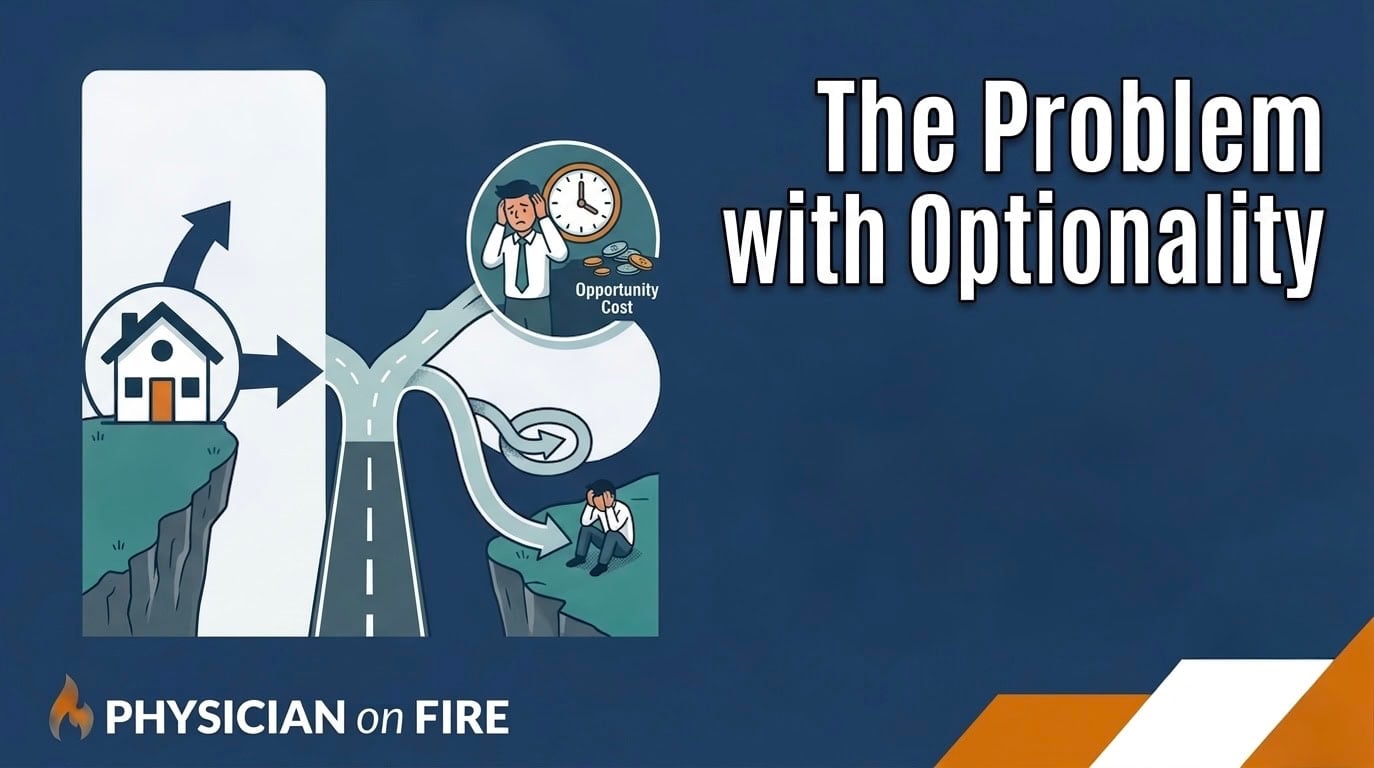
Both of these messages hinge on the same idea—commit to yourself and preserve your optionality. Don’t tie yourself down. Don’t take risks. Always have a way out.
I saw this play out with regards to career selection among my peers at Stanford. Many of them (myself included) went into consulting after graduation because that was the choice of maximal optionality. And many of those who went into consulting later also got their MBAs (for much the same reason). The thinking was simple—why commit to one industry when you can do consulting and eventually work in any industry?
The same logic applies to the manosphere, the online community centered around male issues and masculinity. In the manosphere, being a perpetual bachelor is seen as the ultimate status symbol. It means you are independent and have no one holding you back.
I can see why such an ideology is appealing. It’s attractive to those who don’t want to take risks or are afraid of commitment. Technically, this is also the same ethos behind passive investing. Passive investors don’t commit to a single investment idea (or even a small set of ideas), they own everything.

But there’s a big difference between preserving optionality in your portfolio vs. other parts of your life. In investing, non-commitment leads to better than average outcomes for the typical investor. The data is clear on this.
But preserving optionality in other parts of your life typically doesn’t. Barry Schwartz, the author of The Paradox of Choice, has demonstrated this in his research. Schwartz has found that maximizers (those who always aim to make the best choice) are usually worse off than non-maximizers. As one of his articles in Scientific American states:
…individuals with high maximization scores experienced less satisfaction with life and were less happy, less optimistic and more depressed than people with low maximization scores. Indeed, those with extreme maximization ratings had depression scores that placed them in the borderline clinical range.
Those who always strive for the best in life end up feeling worse than those who commit to something and move on.
Of course, this doesn’t imply that you should commit to something for the sake of commitment. Picking the wrong partner or the wrong career is much worse than preserving your optionality.
But non-commitment as a basis for your life has its costs as well. As Daniel Levinson wrote in The Seasons of a Man’s Life:
One of the great paradoxes of human development is that we are required to make crucial choices before we have the knowledge, judgment, and self-understanding to choose wisely. Yet if we put off these choices until we truly feel ready, the delay may produce other, greater costs.
I know this all too well. I got married at 35 and I just had my first child at 36. Because I will have children slightly later than some of my peers, I wasn’t as committed in my 20s and early 30s.
While that was fun at the time, my non-commitment means that I’ll have less time with my grandchildren in the future. All else equal, I traded off a few years with my grandchildren for a few extra years of being single.
I’m not here to judge this decision, but it’s the kind of tradeoff that is overlooked by the “maximize optionality” crowd. These influencers are happy to tell you about the freedom you get from not committing, but they don’t tell you what you give up for that freedom. Because what you give up only becomes apparent at the end of your life.
Every year you spend with options is another year you don’t spend on the thing you eventually commit to.
This is true of your future career, your future spouse, and in every other part of your life. Of course, options are essential when you have no idea what you like. But once you know, the benefits of optionality begin to decline.
But the real reason why I think more people should commit to something is that studies show that the act of commitment makes you happier.
Why Commitment Makes You Happier
One of my favorite experiments ever conducted involved asking a group of people to rank a set of six paintings from favorite to least favorite. After the ranking was done, the experimenters told the participants that they could take either their 3rd ranked painting or their 4th ranked painting home with them. Naturally, everyone chose their 3rd favorite and went on their way.
A few weeks later, the experimenters had the participants come back and re-rank the six paintings. What they found was that, on average, the 3rd ranked painting moved up to rank 2 and the 4th ranked painting moved down to rank 5. In other words, participants liked the painting they picked more than before and disliked the painting they didn’t pick more than before as well. It’s as if they were saying, “The painting I picked is amazing, but the one I didn’t pick sucks.”

You might think that the participants changed their rankings because they wanted to convince themselves that they made the right choice initially. But that’s where you’d be wrong.
Because the experimenters did something interesting—they had another group of participants rank the six paintings. But these participants all had anterograde amnesia. People with anterograde amnesia can’t form new memories, so their short-term memory only lasts about 30 minutes.
So, the experimenters had the amnesic participants rank the paintings and choose between the 3rd and 4th ranked paintings to take home. Like the non-amnesic participants, the amnesic ones chose the 3rd ranked painting (as expected). After this, the experimenters sent the amnesic participants outside for 30 minutes to “clear” their memory.
They then brought the amnesic participants back in and asked them to identify which painting they had picked to take home. Due to their condition, the amnesic participants couldn’t tell which painting was theirs. Nevertheless, the experimenters had them re-rank the six paintings.
But here’s the shocking part—the amnesic participants showed the same re-ranking behavior as the non-amnesic participants. On average, they ranked the painting they “took home” higher and the one they didn’t pick lower. They did this even though they don’t remember which painting they took home!
This experiment tells us that once you make a choice you start to subconsciously prefer that choice over the options you didn’t select. You aren’t just lying or trying to convince yourself that you made the right decision either. Your actual preferences change based on what you choose.
This is why people who are committed tend to be happier. Not only do they avoid the stress and uncertainty associated with unlimited optionality, but deep down they actually prefer the choice they made.
In a way, the optionality influencers are correct—you should commit to yourself. But the best commitment you can make to yourself is to consciously choose the things that make life worth living.
Thank you for reading!


Previous Events
The $640,000 Conversation You Might Have Missed
Tuesday we ran the numbers live, and one slide quieted the room. Picture two physicians with the same million-dollar portfolio, riding the same market for ten years. One finished with $2.16M. The other with $1.52M. Same funds, same returns. The only thing that separated them was tax and planning decisions, and that gap came to $640,000.
If you couldn’t be there, the recording is up, and it’s worth 45 minutes of your week.Bill Martin and Myhanh Hoskin from Earned walked through after-tax alpha, the slice of your return you actually keep once the IRS and your fund fees have taken their cut.
For a top-bracket doctor, that’s the number that decides your retirement, because a high income means every taxable dollar gets taxed harder than it would for almost anyone else. We showed exactly where the money leaks out, and how to plug it.
We also split the room by how you’re paid. A W-2 physician has a tight set of levers worth pulling: the 401(k), the backdoor Roth, the HSA, and smarter asset location. Carry any 1099 income, and most of us do somewhere, and a second toolbox swings open, from the Solo 401(k) to entity moves that were worth tens of thousands a year on screen.
Then a mid-year read on markets. The Fed is on hold, earnings are running hot and finally broadening past tech, and we talked through when that should shift your plan and when it absolutely shouldn’t.
One idea tied it all together. You don’t need a hotter portfolio. You need to stop the leak, and you need to start before December, not after.
The replay covers all of it, slides included.
Watch the recording now and see where your after-tax alpha is hiding.