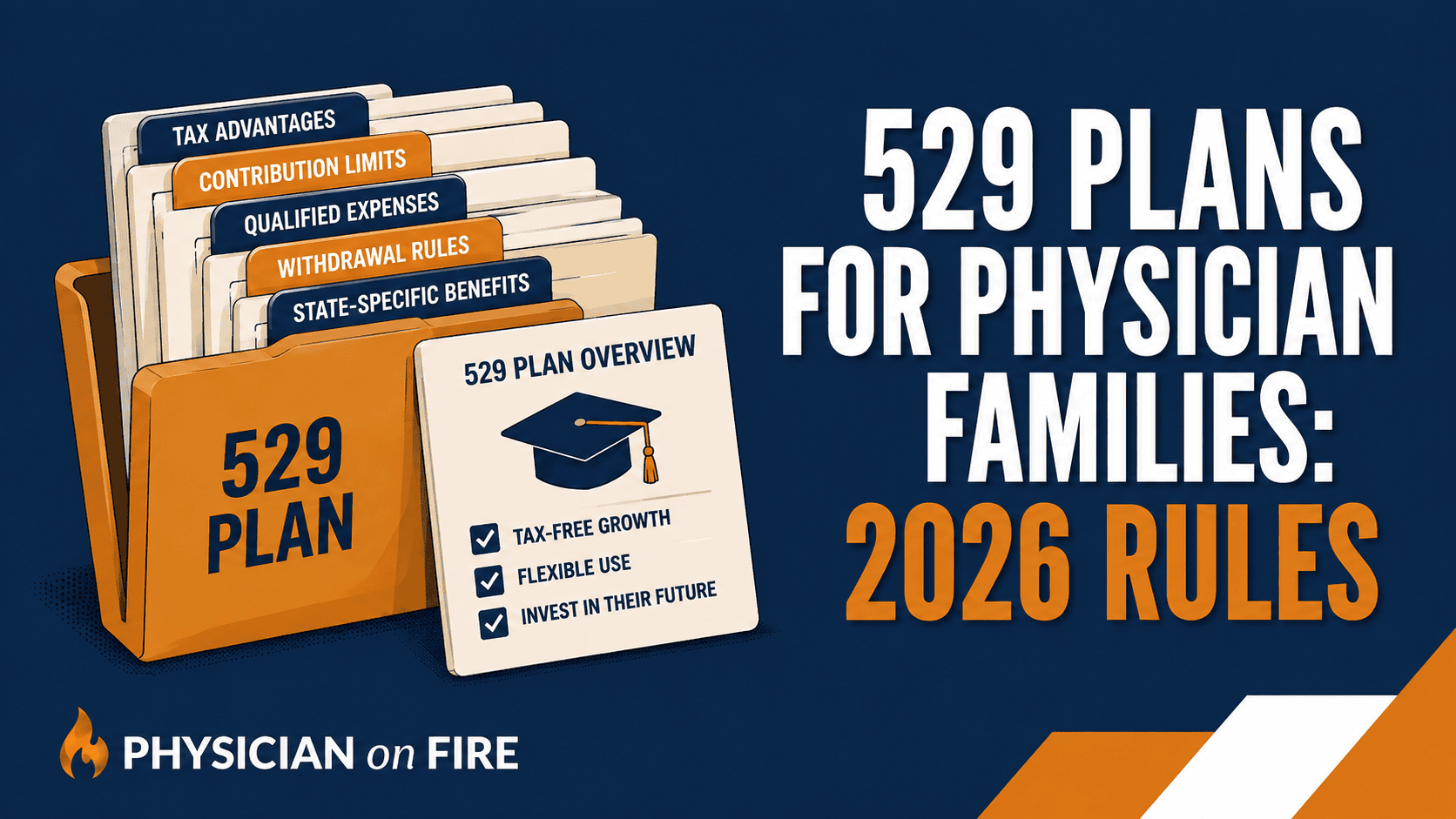
The One Big Beautiful Bill Act, signed into law last July, brought some notable changes to the fine print of 529 plans, many of which took effect in 2026.

For those who don’t know, a 529 plan is an education investment account. The money that accumulates in it can be used for qualifying education expenses. The growth comes out free from federal income tax.
Let’s take a closer look at the changes in 529 plans that you need to know about.
Learn more:
- How to Fund a 529 Plan in 2025 Complete Guide for Physicians and Families
- 7 Ways For High Income Families To Pay For College
- Can You Get Money Out of Your 529?
- Custodial Roth IRA: Is It Right For You?
- 11 Ways to Invest in Your Child’s Future
Changes in 529 Plans in 2026
The K-12 withdrawal limit doubled from $10,000 to $20,000 per beneficiary starting January 1, 2026 and now also includes more than tuition.
As of July 5, 2025, families can use 529 funds tax-free for curriculum materials, outside tutoring, standardized test fees (SAT, ACT, AP exams), dual-enrollment courses taken during high school and educational therapy for kids with disabilities.
Postsecondary credentialing programs qualify as well. Welding, HVAC, CDL training, cosmetology, and professional licensing exams (CPA, bar exam) are now eligible expenses, covering tuition, fees, books, equipment, and continuing education tied to maintaining the credential.
Upcoming Webinar
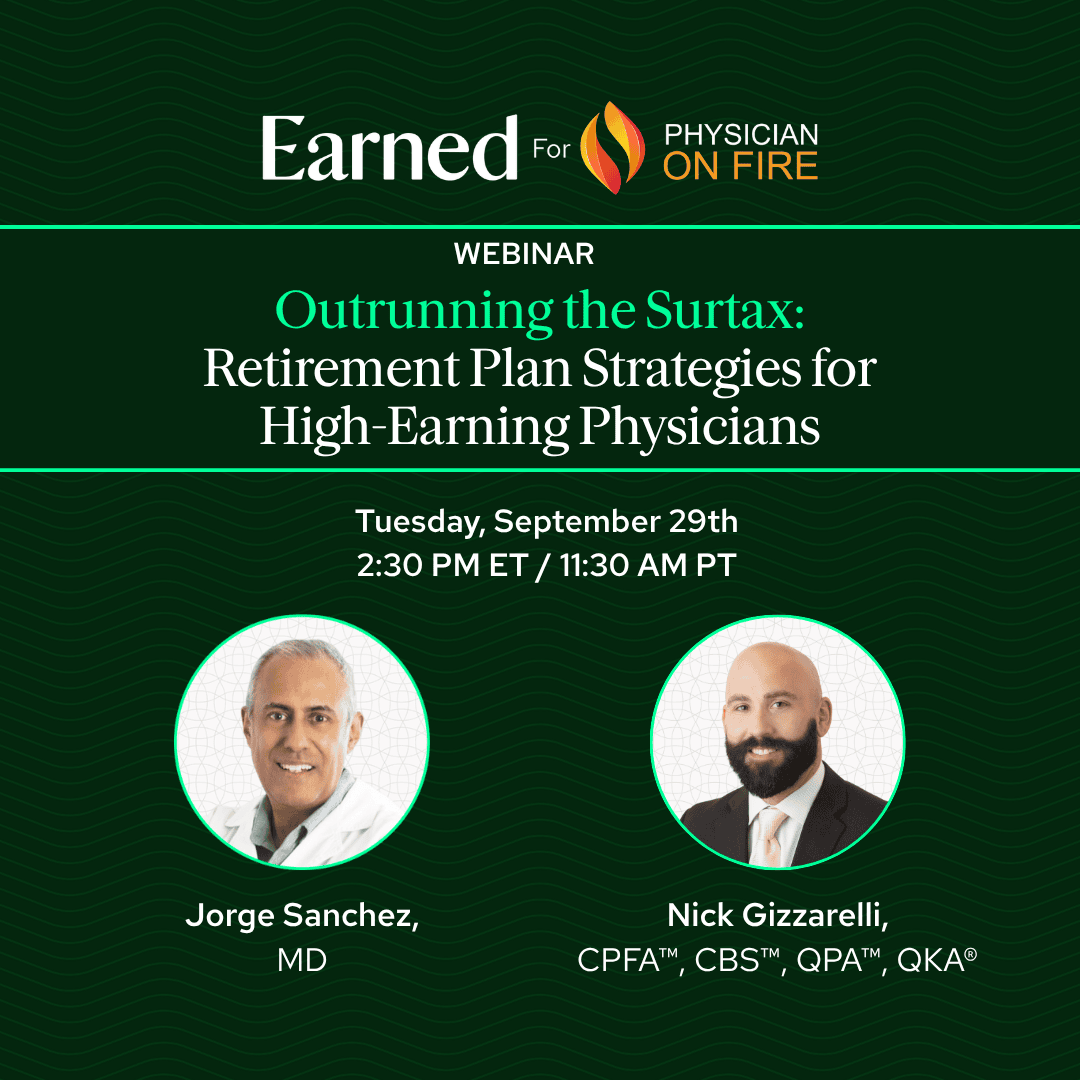
Earned Wealth
Outrunning the Surtax: Retirement Plan Strategies for High-Earning Physicians
Learn how cash balance plans, 401(k) profit sharing, and smart plan design can cut taxable income — keeping high earners under surtax thresholds and helping every physician save more pre-tax.
Register now →The ABLE account rollover provisions, which were set to expire at the end of 2025, are now permanent.
Important: state tax laws don’t automatically follow federal law. Some states haven’t conformed to the OBBBA changes so a withdrawal that’s tax-free federally could still trigger state income tax. Check with your state’s plan or better yet, hire a tax professional before using the newly eligible expenses.
Is Superfunding The Right Move For Physician Parents?
Superfunding isn’t new for 2026 but the dollar amounts have risen with inflation. The 2026 annual gift tax exclusion is $19,000 per donor per recipient, or $38,000 for a married couple electing to split gifts.
Section 529(c)(2)(B) of the tax code allows a donor to front-load five years of that exclusion into a single lump-sum 529 contribution and elect, on IRS Form 709, to treat it as though it were given evenly across five calendar years.
In practice, that means one parent can contribute up to $95,000 to a single beneficiary’s 529 in one year, or a couple can contribute up to $190,000.
One slight hitch though, once you superfund, any additional gifts you give above the annual exclusion to that same beneficiary within the five years will make a dent in your lifetime exemption.
If the donor dies during that five-year window, the portion allocated to years after death can be pulled back into the estate for tax purposes.
| Funding | Max lump sum per beneficiary |
| Single donor | Up to $95,000 |
| Married couple, gift-split | Up to $190,000 |
| Grandparent couple | Up to $190,000 per grandchild |
Grandparent-owned 529 and Estate Planning
Superfunding isn’t limited to parents. A single grandparent can move up to $95,000 out of their estate in one transaction, or a grandparent couple up to $190,000 per grandchild, while retaining control of the account.

This allows them to help fund education for the next generation while having the added benefit of getting a reduction on estate taxes.
Grandparent-owned 529 distributions used to count against a student on the FAFSA but that treatment has been restructured under the FAFSA simplification changes, making grandparent-owned accounts less of a liability than they once were.
Families whose kids may apply through the CSS Profile should still confirm how individual schools treat those accounts.
529-to-Roth Rollovers
One of the biggest hesitations people had about funding a 529 before 2024 was what if the beneficiary doesn’t use it all? Non-qualified withdrawals incur income tax on the earnings plus a 10% penalty so an overfunded account used to feel like a trap.
The Secure 2.0 Act changed that. Beneficiaries can now roll up to $35,000 over their lifetime from a 529 into a Roth IRA in their own name, tax and penalty free.
A few conditions apply.
The 529 has to have been open for more than 15 years. The specific funds being rolled over need to have been in the account for at least 5 years before the rollover.
Each year’s rollover is capped at that year’s annual Roth contribution limit ($7,500 in 2026) and is reduced by any other IRA contributions the beneficiary makes that year. The beneficiary also needs earned income equal to whatever amount is rolled over.
This is by no means a loophole to dump unlimited leftover funds into retirement savings but it does reduce the risks associated with overfunding.
ABLE Account Transfers
529 funds can also move tax-free into a 529 ABLE account for a beneficiary with a disability. This option has been around since 2017 but it was set to expire at the end of 2025.
OBBBA made it permanent, along with the ABLE-to-Work contribution provision and Saver’s Credit eligibility for ABLE contributions.
Can A Trump Account Replace a 529?
The OBBBA also introduced Trump Accounts which give children born between 2025 and 2028 a one-time $1,000 federal seed contribution, with parents, relatives, and employers able to add up to $5,000 a year combined.
If you’re wondering whether these compete with 529s for physician families, the answer is no. Trump Accounts are locked until the child turns 18, invest only in low-cost index funds tracking broad U.S. equities, and aren’t limited to education spending.

529 plans still offer higher contribution ceilings, more investment flexibility and the superfunding option described above. For a physician household with the cash flow to fund both, the two accounts function as complements rather than an either-or decision.Learn more: Are Trump Accounts Worth It? Everything You Need to Know and Act on
Why Funding A 529 Is More Important Than Ever
New federal caps on Parent PLUS loans ($20,000 per year, $65,000 total per dependent) and the phase-out of Grad PLUS loans for new borrowers have permanently changed how much families with limited income borrow for college.
For most physician households with intentions of adding more doctors to the family, these lower limits mean tighter medical school financing since Grad PLUS has historically been a common way to bridge medical school costs.
The financing options for your kids are no longer as generous as they used to be. Whether or not your kid is even able to attend medical school in 15–20 years may very well hinge on them having a well-funded 529.
But a 529 plan works best as one piece of a plan that already has retirement, an emergency fund and debt payoff accounted for. Which brings me to…
Retirement First, College Second
I’ve said it before and I’ll say it again: your kids will be able to borrow for college but you cannot borrow for retirement.
Physician parents who haven’t maxed out their 401(k), 403(b), 457(b), HSA, or backdoor Roth should focus on those accounts before they decide to superfund a 529. Training years already mean low savings and lost compounding for at least a decade.
Front-loading a 529 before your own retirement accounts are on track only exacerbates that problem.
Frequently Asked Questions
How much can you superfund a 529 plan in 2026?
A single donor can contribute up to $95,000 to one beneficiary’s 529 in a single year. A married couple electing to split gifts can contribute up to $190,000. Both amounts count as five years of gifting under the IRS’s five-year election on Form 709.
What is the 2026 annual gift tax exclusion?
$19,000 per donor per recipient. Married couples electing to split gifts can give $38,000 per recipient without filing a gift tax return.
Upcoming Webinar
Earned Wealth
Outrunning the Surtax: Retirement Plan Strategies for High-Earning Physicians
Learn how cash balance plans, 401(k) profit sharing, and smart plan design can cut taxable income — keeping high earners under surtax thresholds and helping every physician save more pre-tax.
Register now →What is the 529 K-12 withdrawal limit for 2026?
$20,000 per beneficiary per year, up from $10,000. The increase took effect January 1, 2026 under the One Big Beautiful Bill Act.
Can 529 funds pay for tutoring or test prep?
Yes. As of July 5, 2025, qualifying K-12 expenses expanded to include outside tutoring, standardized test fees, curriculum materials, and educational therapy for students with disabilities.
Can 529 funds pay for a professional license or trade certification?
Yes. Postsecondary credentialing programs including CDL training, cosmetology, HVAC, the CPA exam, and the bar exam now qualify. Eligible costs include tuition, testing fees, books, and continuing education tied to the credential.
How much can be rolled from a 529 into a Roth IRA?
Up to $35,000 over the beneficiary’s lifetime, tax and penalty free. The 529 must be open at least 15 years and the specific funds rolled over must have been in the account at least 5 years.
Should a physician fund retirement or a 529 first?
Retirement accounts should come first. You can borrow for college but not for retirement, and physicians already lose a decade of compounding to training.
Do all states follow the new federal 529 rules?
Not automatically. Some states haven’t conformed to the OBBBA changes, so a withdrawal that’s federally tax-free could still be taxed at the state level. Confirm with your state’s plan before using a newly eligible expense.