According to the 2026 Medscape Physician Compensation Report, average physician pay reached $386,000 this year, up 3% from 2025 and enough to outpace the 2.7% core inflation rate.

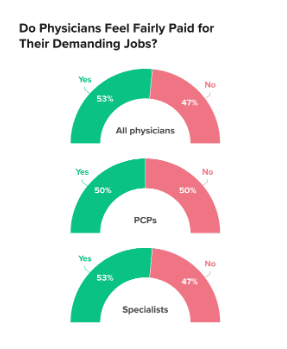
Eight specialties crossed half a million dollars, led by orthopedic surgery at $611,000. 53% of physicians said they feel fairly compensated individually, the highest share in years. All wonderful news.
 |
 |
Source: Medscape
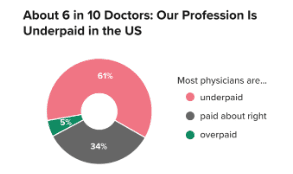
However, 61% of physicians still believe the profession as a whole is underpaid, and the average workweek barely budged. 63% of physicians blame bureaucratic work and electronic health records for their burnout. 14% of physicians say that they’re planning to leave clinical medicine altogether because of it.
And hospital systems aren’t going out of their way to ease the situation. Private equity and mergers bring in money that should help expand staff and provide a better work environment.
On the contrary, doctors face heavier workloads than ever with no room for PTO. All to protect the bottom line for those at the top.
Private health systems chasing profit and the policy turmoil of declining reimbursement and Medicaid funding work together to create the perfect storm of doctors at their wits’ end. This month we saw exactly how that plays out in real life.
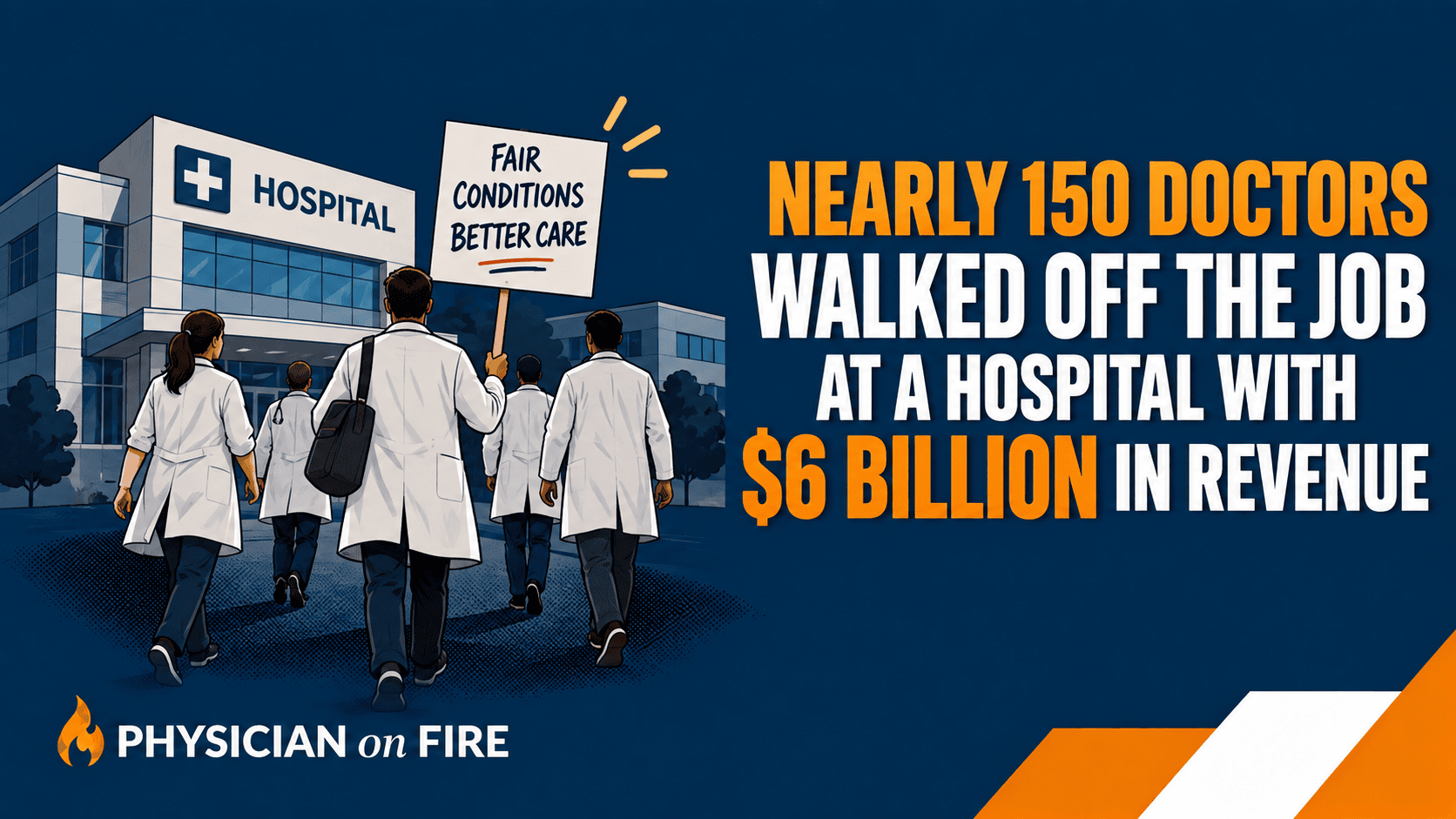
Nearly 150 unionized doctors at two Twin Cities hospitals went on strike, in what’s believed to be the first walkout by private sector hospital doctors in U.S. history.
This was not a spur-of-the-moment decision, but came after three years of bargaining that went nowhere. The health system had made $6 billion in 2025 revenue but was negotiating pay and sick time as if there were nothing left to give.
The cherry on top? A $26 billion merger behind closed doors.
In case you missed it: The Great Debate of Physician Unionization
What Happened at Mercy and Unity
Doctors represented by Doctors Council SEIU picketed outside Allina Health’s Mercy Hospital in Coon Rapids and its Unity campus in Fridley for four days starting September 14, carrying signs reading “patients over profits.”
The union voted to unionize in 2023, sat through more than 60 bargaining sessions and authorized the strike with 90% support in July before giving the required 10 days’ notice.
Allina downplayed the disruption, stating that the union represents only about 10% of the physicians credentialed at both campuses and told the Minnesota Reformer that 37 union doctors crossed the picket line while 40 weren’t scheduled to work that week. Both campuses stayed open. The strike ran alongside a separate seven-day walkout by roughly 60 Allina hospice nurses.
Hospitalist Dr. Amber Galarowicz, on the union’s bargaining team, said that the fight isn’t just about pay. “We need to be able to stand up for ourselves,” she said.
Why The Doctors Walked Out
Paid sick leave was likely the biggest factor. Minnesota law entitles full-time workers to six days a year but the doctors say they can’t take paid time off when they’re sick without dipping into vacation days.
Allina says its physicians already have paid leave and that it’s in compliance with state law. Never mind the fact that healthcare workers face a higher risk of getting ill.
“It’s become unsustainable for us to continue working like that,” said Dr. Alia Sharif, another bargaining team hospitalist.
Dr. John Wurst, who was part of the strike, said that doctors are also fighting to keep decision-making in physician hands, pointing to artificial intelligence tools that now weigh in on insurance billing as one example of ground already lost.
“We feel like we’re being excluded from decisions that affect the care of our patients,” Wurst said, adding that leaving physicians out of those calls means medical resources won’t end up allocated in a way that actually serves the community.
Cost of living adjustments have been part of the back and forth since last fall. This is amid rising inflation and fuel costs.

Coverage itself is also disputed. Because doctors often work across multiple Allina facilities, the two sides can’t agree on which physicians the union contract actually covers.
Doctors need to spend at least 20% of their time at Unity or Mercy to qualify for the bargaining unit but how that 20% gets calculated is still up in the air.
The Policy Backdrop
Apart from this local dispute, doctors across the nation are contending with policy changes that directly affects how much they earn.
Medicare’s 2026 physician fee schedule finalized a 2.5% “efficiency adjustment” that CMS says reflects services becoming easier to perform over time.
The policy applies to roughly 7,700 billing codes, including surgical procedures, diagnostic imaging interpretation, outpatient interventions, interventional pain management and orthopedic services.
Learn more: A Physician’s Guide to Medicare’s Specialty Care Changes — What’s Really Happening?
By law, Medicare physician payments have to stay budget neutral, meaning a raise for one group of doctors requires a cut somewhere else. Primary care physicians and time-based services keep the 2.5% increase Congress passed last year.
Specialists performing procedures have to watch that same increase get wiped out by the efficiency adjustment, and in some cases end up with a net cut once other changes are factored in.
The American Medical Association says that these changes will affect certain specialties more than others. More than a third of oncologists face cuts as steep as 20%. Over half of internists can expect reductions of 5% or more, and the same goes for 80% of infectious disease physicians.
One physician commented that as one of two infectious disease specialists in her region, the cuts would force her to refuse care to Medicare and Medicaid patients or simply retire.
The Congressional Budget Office estimates that the 2025 reconciliation law will cut federal Medicaid spending by $911 billion over 10 years, and 16 million people are projected to lose coverage through Medicaid or the ACA marketplace.
The layoffs stemming from these policy changes are no longer hypothetical. Back in June, Hennepin Healthcare in Minneapolis, in the same metro area as Allina’s Mercy and Unity campuses, announced roughly 100 layoffs this year and cut 100 inpatient beds, citing a $50 million shortfall tied directly to Medicaid revenue losses.
Trinity Health said it expects to lose $1.5 billion to “recent and future government policy changes.” Baptist Health in Arkansas laid off 150 employees, including 10 physicians, while shutting down its nephrology, pulmonary, oncology and infectious disease services.
Allina itself is telling employees that its economic decisions stem from “rising costs for drugs, supplies and labor, ongoing reimbursement pressures, increases in claim denials from insurance companies, and anticipated impacts from federal policy and reimbursement changes.”
Also read: What Physicians Should Know About the CMS Cut That Shaves Your Same-Day E/M Payment in Half
The Merger Looming Over Everything
On top of all this is Allina’s proposed merger with Sutter Health, a California nonprofit, that would combine the two systems into a $26 billion operation spanning 39 hospitals across three states.
The merger is under review by the Minnesota Attorney General’s Office and opposed by labor unions who warn that consolidation tends to raise costs for patients while suppressing wage growth for the workers providing care.

Sharif said she doesn’t expect the union to block the deal but she’d like a community benefits agreement that shields against layoffs and service cuts, similar to one recently reached between the state and Sanford Health over its acquisition of a Robbinsdale hospital.
What Physician Unionisation (Or Lack thereof) Means for You
For those who aren’t working at Mercy or Unity, this may feel abstract. It’s not.
Physician unionization has been on the rise because things that used to work, like individual negotiation, specialty societies lobbying CMS, and professional goodwill, keep losing to system-level budget decisions.
If you’re an employed physician, this deserves your attention. The same reimbursement structure and Medicaid cuts may come for whatever health system signs your paycheck.
Strikes make headlines because everyone has an opinion on them. Bureaucrats like to dismiss legitimate physician demands as unreasonable. But the jig is up, and the people are decrying the monopolization of our healthcare system.
The question is, what will it take to stop the consolidation machine?
Also read: A Physician’s Guide to Medicare’s Specialty Care Changes — What’s Really Happening?